200-Hour Online Yoga Teacher Training: Hatha & Organic Alignment
This course follows the same curriculum, learning outcomes and assessment requirements online and in person in Da Lat. Teaching delivery, schedules and tuition depend on the format. Explore the other format.
You study 60+ foundational asanas, functional anatomy and yoga philosophy, then practise observing and giving instructions. I give feedback on what to practise next.
- 80H live guidance on Zoom
- 60H teaching practice
- About 2.5 months, around 3 hours each evening
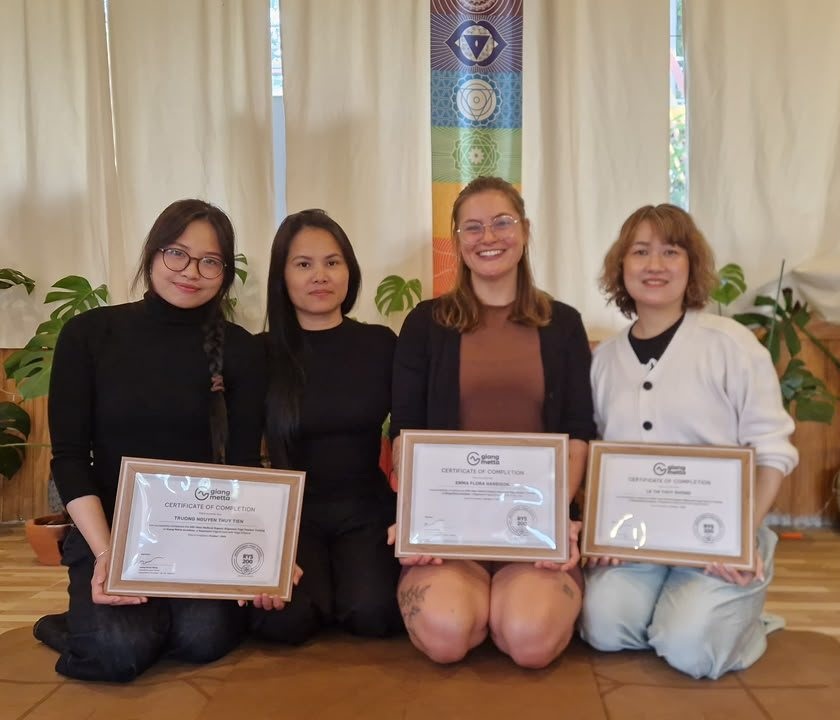 200H graduates
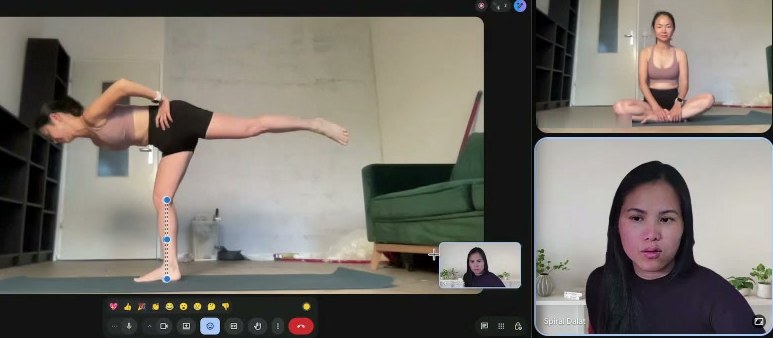 Online lesson: reviewing a pose photo together
Who Is the Online 200H For?
You can start with no yoga background, or you may already practise and want to learn how to guide others. The course builds a Hatha foundation and teaches you to observe, cue and plan classes for beginners; you do not need to be flexible or able to do advanced poses before you start (why stiff beginners can learn yoga, and teach it).
Online does not mean watching videos only: you set aside time for live sessions, teaching practice and theory study. You also need to invite people to practise teaching with. If you prefer to learn in a studio, see the in-person 200-hour training in Da Lat, Vietnam, arranged by appointment.
How the Online Training Works
200 hours: 80H of live guidance, 60H of teaching practice with people you invite, 40H of alignment, anatomy and breath theory, and 20H of philosophy and assessment. Approximately 2.5 months with around 3 hours of evening study; this is not 200 hours of live classes.
- 80H live guidance on Zoom: you set up your camera so Giang Hoang (E-RYT 500) can observe your posture, cue you verbally and ask what you feel, then adjust from there. You also practise cueing and observing students.
- 60H teaching practice: you teach people you invite (family, friends or your own students) while Giang watches live on Zoom and gives teaching feedback, ending with a 60-minute graduation practicum class.
- 40H alignment, anatomy and breath theory: lessons on alignment, applied yoga anatomy, biomechanics and the breath. The course materials are yours to keep for life.
- 20H philosophy and assessment: yoga philosophy and an assessment of theory and practice.
Language. The course is taught bilingually in English and Vietnamese, so you can follow the whole training in English: live sessions, video lectures and course materials.
Time zone and schedule. Plan for about 2.5 months with around 3 hours of evening study; this covers all parts of the 200 hours, not 3 hours of Zoom with Giang every evening. Giang is based in Vietnam (GMT+7). When you enquire, share your country, time zone and the evening hours you can commit, so the live session schedule can be checked with you before you enrol.
Check before you enrol. See Giang Metta Academy's school profile on Yoga Alliance and Giang Hoang's background. Please confirm the school's current registration status and RYT requirements yourself; completing the course does not automatically register you as an RYT. For the full picture, read what Yoga Alliance requires from online training, and six questions to ask a school.
Graduates of Giang's 200-hour training
Hao, Tien and Emma completed the 200-hour training in person at the Da Lat studio and share their experience of learning with Giang. The videos have Vietnamese and English subtitles.
Learn to Teach, Not Just to Practice
Knowing a pose isn't the same as teaching a class. In the 60 hours of teaching practice, you learn to observe, cue, check in with students and receive teaching feedback. In this clip from an in-person methodology session, trainees work out where to stand and how to demonstrate when mats are arranged differently, or when students sit in a circle around you.
See before you enrol
See how the 200H course teaches you to lead a class
Articles about what a teacher does in class: planning, speaking, observing, listening and explaining poses.
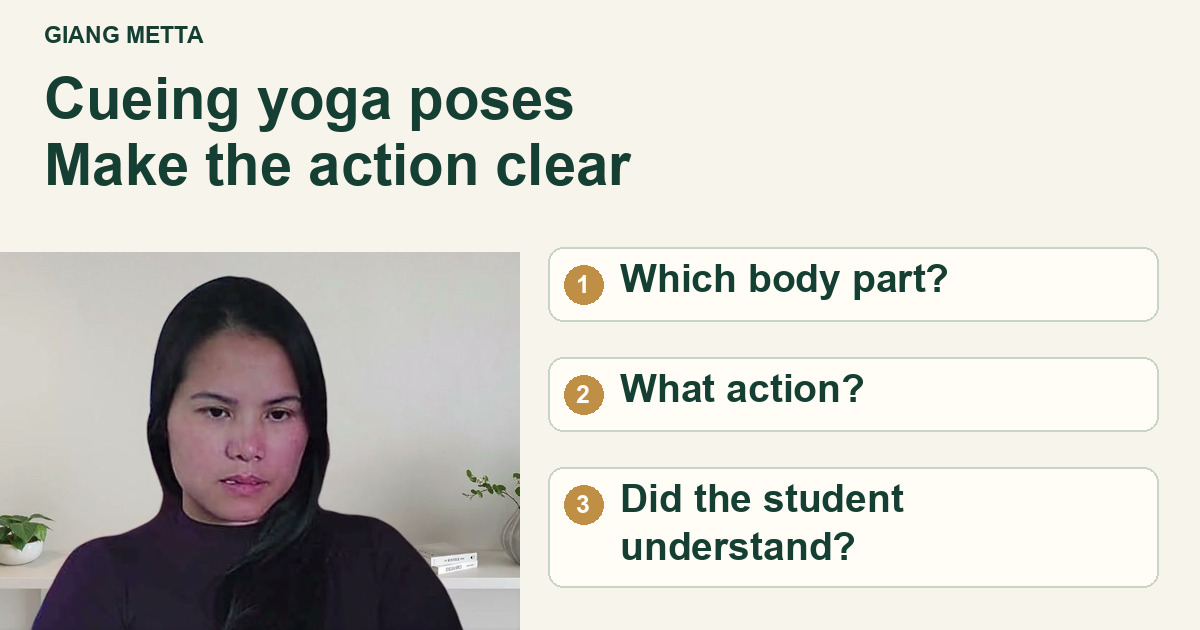
1Leading a class
You can do the poses. What do you say in front of a class?
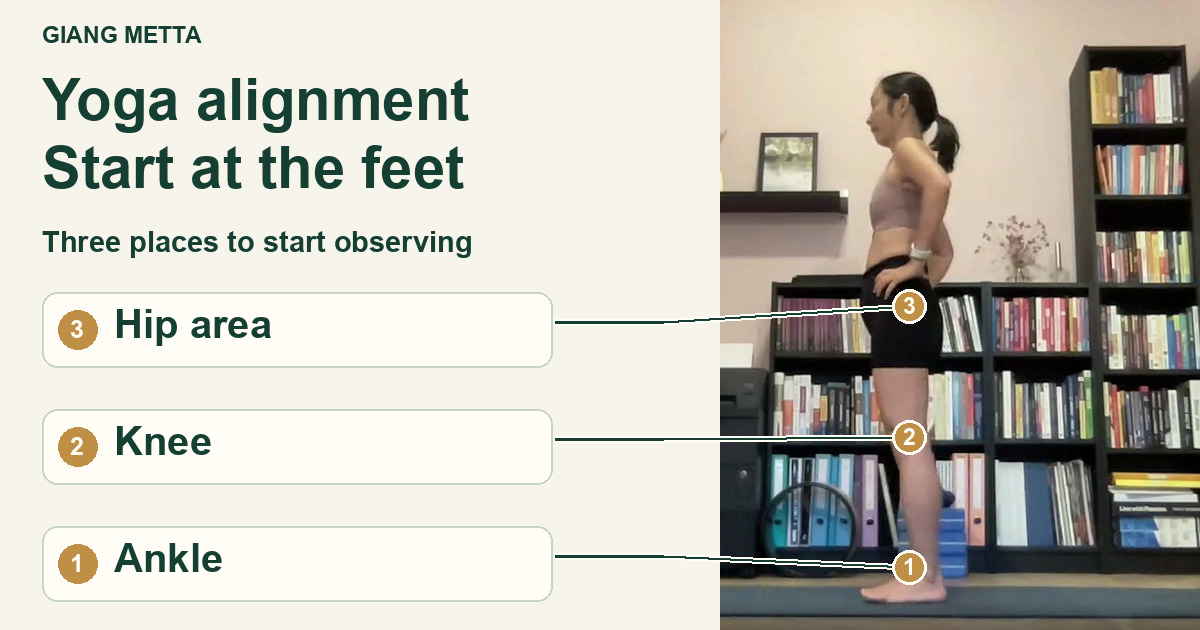
2Explaining poses
You know the pose. Can you explain why?
3Foundations
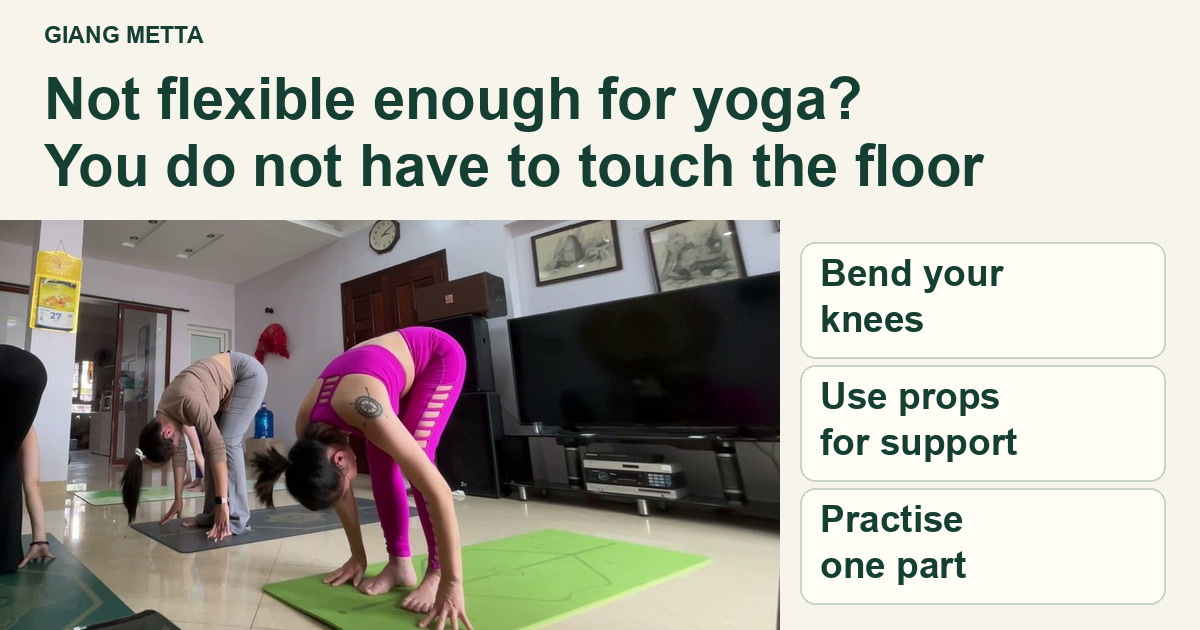
Still stiff, breath not steady: can you learn to teach?
Curriculum — 7 Masterclasses & 100 Asana Encyclopedia
Giang Hoang’s proprietary bilingual Vietnamese-English curriculum with pronunciation guides (IPA) combining classical philosophy, functional anatomy, musculoskeletal alignment, and international teaching pedagogy.
Classical foundations from Patanjali Yoga Sutras, Bhagavad Gita, and the Eight Limbs:
- Core Essence: Yoga is more than physical exercise — an integrated practice of body, breath, mind, and pure witness consciousness.
- Historical Eras: Tracing authentic lineage from Vedic, Pre-classical, Classical (Patanjali), Post-classical (Tantra & Hatha) to contemporary modern Yoga.
- 4 Classical Paths (Sivananda/Vedanta): Karma Yoga (Selfless Action), Bhakti Yoga (Devotion), Jnana Yoga (Wisdom Inquiry), and Raja Yoga (Meditative Mind Mastery).
- Patanjali’s Yoga Sutras: Decoding Sutra 1.2 — Chitta Vritti Nirodha (Calming the fluctuations of the mind) and the ultimate liberation (Kaivalya).
- The Eight Limbs of Yoga (Ashtanga): Yama (Ahimsa, Satya, Asteya, Brahmacharya, Aparigraha), Niyama (Saucha, Santosha, Tapas, Svadhyaya, Ishvara Pranidhana), Asana (Sthira Sukham Asanam), Pranayama, Pratyahara, Dharana, Dhyana, and Samadhi.
- Tantra & Hatha Origins: Ha (Solar) and Tha (Lunar) energetic equilibrium; Teacher ethics, holding space, and non-medical boundaries.
Biomechanics, 5 sacred breathing rules, 6 restorative pranayamas & pedagogy:
- Prana & Breath Biomechanics: Nadi energetic channels (Ida, Pingala, Sushumna), cardiorespiratory synchronization, and why modern humans must relearn to breathe.
- 5 Core Breathing Rules & 4 Pedagogical Pillars: Nasal breathing, diaphragmatic expansion, smooth rhythm, breath leading movement, and autonomic stillness.
- 6 Core Restorative Pranayamas: (1) Chest Breathing — (2) Diaphragmatic Abdominal Breath — (3) Full Yogic Breath (Dirga) — (4) Alternate Nostril (Nadi Shodhana) — (5) Ocean Breath (Ujjayi) — (6) Skull Shining (Kapalabhati).
- Safety Protocols, Contraindications & Class Pedagogy: Contraindications (cardiovascular, blood pressure, pregnancy), recognising when a student should check with their doctor, and breath observation skills for safe teaching.
A practical example: how to breathe in yoga, and how to cue it for beginners. For teaching practice: how to cue yoga poses and how to observe and adjust a student's pose. Poses are learned in groups, for example backbends: cobra vs upward-facing dog, locust vs bow pose and what to practise before wheel pose.
Spinal column, joint stabilization, deep core, and Ahimsa injury prevention:
- The Spinal Axis: 4 biological curves (Cervical, Thoracic, Lumbar, Sacral), neutral spine, and how the spinal discs respond in forward bends, backbends and twists.
- 3 Critical Joint Complexes: Multi-axial hip joint mobility, knee hinge joint stabilization, and the 3-point foot tripod foundation.
- Key Muscular Chains & Deep Core: Psoas major (trunk-leg kinetic bridge), transverse abdominis, and posterior hamstring fascia.
- 6 Primary Movement Vectors: Flexion, extension, lateral bend, axial rotation, axial elongation, and inversion; distinguishing muscular tension from bone compression.
- Ahimsa Safety Protocols: Safeguarding the sacroiliac joint (SI joint), preventing hamstring avulsion, and avoiding lumbar impingement.
A practical example: what alignment in yoga means, and how I adapt it to different bodies.
5 core alignment principles, Drishti gazing, gravity forces, and reciprocal inhibition:
- Core Purpose of Alignment: Skeletal joint stacking, kinetic load distribution, minimizing injury risks, and honoring skeletal variation.
- 5 Core Alignment Principles & C-Curve Backbends: (1) Ground-up base ➔ (2) Joint stacking ➔ (3) Reciprocal muscular activation ➔ (4) Axial elongation ➔ (5) Functional alignment over rigid aesthetic dogma; C-Curve backbends protecting L4-L5-S1.
- 10 Drishti Gazing Points & Gravity Effects: Focal eye placement in balance; 5 gravity load vectors; Reciprocal Inhibition mechanics for deep, safe releases.
- Movement Reading & Hands-On Practicum: Identifying 10 common geometric errors on the mat and executing precise verbal and prop-based corrections.
View tuition Ask Giang on WhatsApp
Comprehensive masterclass on 11 classical and contemporary styles (Micro-Slides structure):
- Group 1: Classical Traditions: (1) Hatha Yoga (Ha-Tha polarity balance, joint stability & nervous system calming) — (2) Ashtanga Yoga (6 fixed sequences, Ujjayi, Bandha, Drishti) — (3) Iyengar Yoga (millimeter precision alignment & props engineering) — (4) Kundalini / Sivananda Yoga (chakra awakening, mantra, kriya & 5 lifestyle pillars).
- Group 2: Dynamic & Alignment Styles: (5) Vinyasa Flow (breath-led fluid sequencing) — (6) Power Yoga (core strength & stamina) — (7) Bikram & Hot Yoga (26 postures in a 40°C room) — (8) Jivamukti Yoga (vigorous asana, Nada sound, and vegan ethics).
- Group 3: Restorative & Somatic Styles: (9) Yin Yoga (3–5 min holds targeting fascia & TCM meridians) — (10) Restorative Yoga (zero-effort prop unwinding) — (11) Somatics & Deep Restorative Yoga (internal awareness and fascial release).
- Teaching Identity: Mentoring students to identify their personal teaching voice matching their physical constitution and career vision.
Stick figure notation, bell curve class architecture, English cues & class flows:
- [1] Stick Figure Notation: Universal visual language — sketch a complete 60-minute class flow on a single sheet in 5 minutes, enhancing spatial memory.
- [2] Dynamic Warm-Up Sequences: Mobilizing joint synovial fluid dynamically from feet to cervical spine without cooling static holds.
- [3] The Bell Curve Structure: 5 energetic class phases (Centering ➔ Dynamic Warm-Up ➔ Peak Asana Progression ➔ Counter-poses ➔ Savasana).
- [4] Timing & 3 Student Levels: 4 flexible time blocks (60–75–90 min); designing 3 adaptive modifications (Beginner, Intermediate, Advanced) for all poses.
- [5] English Cueing Language: Standardized formula
[Breath + Action + Alignment]for concise, clear teaching commands. - [6] Safety, Consent & Ethics: Two-sided hands-on consent cards, trauma-informed cueing language, and PAR-Q health questionnaire screening.
- [7] 2 Complete Lesson Plans: Hip Openers Sequence & Spine Alignment Flow with full stick figures ready to teach immediately.
Voice modulation, teacher presence, 3-tier assists, online instruction & practicum:
- [1] Voice & Vocal Modulation: Diaphragmatic projection preventing vocal fatigue, clear articulation, and navigating 3 vocal registers (Grounding, Alignment, Uplifting).
- [2] Presence & Body Language: Calm grounded holding environment, compassionate presence, strategic mat pacing, and 360° student observation.
- [3] Observation & 3-Tier Assists: International 3-tier protocol (Tier 1 Verbal cue ➔ Tier 2 Visual demo ➔ Tier 3 Consensual safe touch).
- [4] Online vs. In-Person Teaching: Professional hybrid livestream setup, high-resolution audio, and remote spatial cues without physical contact.
- [5] Handling Unexpected Moments in Class: Cramps, feeling light-headed, emotional tears in Savasana; knowing when to stop and suggest medical help, and keeping non-medical teaching boundaries.
- [6] Studio Sanctuary Standards: Designing 5 sensory dimensions (ambient light, pure essential oils, acoustic sound, warm room) and prop sanitation.
- [7] Demonstration Artistry & Practicum: Strategic decision-making on when to demonstrate vs. observe, and formal 60-minute graduation practicum examination.
Comprehensive alignment master dictionary for professional certified yoga instructors:
- 4-Step Proprietary Posture Protocol: (1) Entry & Breath integration ➔ (2) Exit & Reset joint safety ➔ (3) Organic Alignment bone support & props ➔ (4) Core Benefits & Precautions.
- 10 Comprehensive Foundational Asana Groups: (1) Forward Bends — (2) Backbends — (3) Lateral Bends — (4) Twists — (5) Hip & Shoulder Openers — (6) Core Strength — (7) Arm Balances — (8) Standing Balances — (9) Safe Inversions — (10) Deep Restorative & Savasana.
- Adaptive Prop Variations: Detailed guidance on using foam/cork blocks, dual-buckle straps, bolsters, and wall support to adapt postures to each student's needs.
The Certificate of Completion is issued by Giang Metta Academy. RYT 200 registration with Yoga Alliance is a separate application subject to its requirements, not an automatic credential or guarantee of employment.
💳 International Payment Note: All tuition fees are listed and charged in Vietnamese Dong (VND). After your enquiry, Giang confirms the payment details with you directly; for international transfers, your bank applies its own exchange rate and fees.
Life happens? For circumstances beyond your control (a health issue with a medical recommendation, pregnancy and childbirth, or sudden work travel), you may defer 100% of your tuition to a later course within 12 months of completing enrolment and make up any missed modules. Tuition is not refunded for a change of mind, unless the law provides otherwise or Giang Metta is at fault for being unable to run the course as committed. Full details: tuition, deferral and transfer terms.
Questions Before You Enrol
Is this online 200-hour training registered with Yoga Alliance?
Giang Metta Academy has a school profile on Yoga Alliance (RYS 200 & RYS 500, YA ID 442630). The Certificate of Completion is issued by Giang Metta Academy. Registering as an RYT 200 is a separate application to Yoga Alliance under the requirements in effect when you apply; it is not automatic. Please check the school’s current status on the Yoga Alliance profile before you enrol.
Is it live, or pre-recorded videos?
Both, and the split is clear. 80 of the 200 hours are live sessions with Giang on Zoom, where she watches your posture and listens to your cueing. 60 hours are teaching practice with people you invite, watched live by Giang with feedback, 40 hours are alignment, anatomy and breath theory, and 20 hours are philosophy and assessment. It is not 200 hours of live classes.
Can I follow the whole course in English?
Yes. The course is taught bilingually in English and Vietnamese, and the live sessions, video lectures and course materials are all available in English.
I live in Europe, the Americas or Australia. Will the time zone work?
Giang is based in Vietnam (GMT+7). When you enquire, share your country, time zone and the hours you can commit. The live session schedule is checked with you before you enrol, so you know whether it fits your week.
When does it start, and how long does it take?
Online intakes run in January, March, May, July, September and November. Each intake takes about 2.5 months with around 3 hours of evening study. Those 3 hours cover every part of the course, not 3 hours of Zoom every evening.
Do I need to be flexible or already practise yoga?
No. You can start with no yoga background. The course builds a Hatha foundation first, and you do not need advanced poses to begin.
How much is the tuition, and how do I pay from abroad?
Tuition is 26.000.000₫. The Early Bird price is 24.000.000₫ (3 Early Bird places). Fees are charged in Vietnamese Dong (VND). After your enquiry, Giang confirms the payment details with you directly; your bank applies its own exchange rate and fees.
Will I be ready to teach, or find work, after the course?
You finish with 60 hours of teaching people you invite, with Giang's feedback, and a 60-minute graduation practicum class. That is a real start, not a guarantee. No course can promise you a job or an income. After graduating you still need to teach real people, whose bodies are not like yours, and keep learning from them.
Still unsure about something? Ask Giang on WhatsApp.