How can you tell if a yoga student understands?
At the start of an online lesson, I asked a student if they remembered the alternate-nostril breathing exercise. They said yes. Then I asked them to talk through it while doing it. At the change of sides, the order of breathing in and out became mixed up.
I can understand that. When I first practised, my teacher would say breathe in, and I would breathe out.
A “yes” told me they remembered learning the exercise. Asking them to explain it showed me where they were getting stuck.
The same part of a lesson
Ask differently. Hear more.
Two example questions, not a word-for-word transcript of the lesson.
Do you remember?
Yes.
I know the student thinks they remember. I do not yet know how they connect the steps.
Talk me through the steps in your own words.
First… then…
I can hear which steps are clear and where they get stuck, rather than guessing from a nod.
Before deciding someone understands, give them a chance to explain what they understand.
I went back over the part that was mixed up, explained the change of sides, and asked the student to tell me once more. This time, their explanation matched the order I had just taught.
A small step forward. It did not mean they would remember it for a long time, practise it correctly on their own, or be ready to guide someone else. But I had a clearer idea of what to teach next.
In this article
1. What does a “yes” tell you?
The student remembered the name of the exercise. But when explaining the steps in order, part of it did not match what I had taught. Those two things can both be true. Remembering that you learned something and explaining it yourself are different tasks.
That mix-up does not tell me the student was careless, a poor learner, or just saying yes to end the conversation. It tells me which part needs another explanation. My job is to make that part clearer, not put a label on the student.
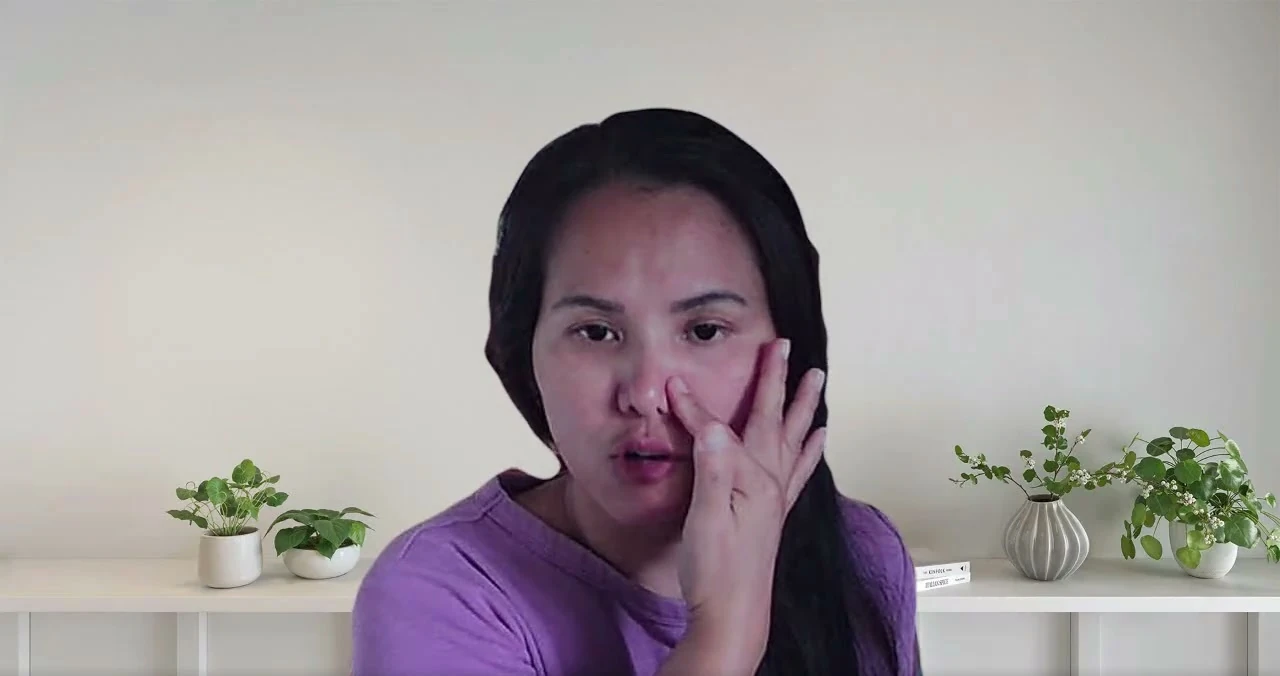
For someone learning to teach, explaining is also a chance to practise putting thoughts into words. An idea can feel clear in your head and still come out in a muddle. That is something to practise, not something to hide.
This article is about checking what someone has learned, not instructions for the breathing exercise in the opening scene. For choosing words that help someone move, see how to cue yoga poses so beginners can follow.
2. What should you listen for?
You do not need to ask a student to repeat the whole lesson. In the opening scene, I asked for just one round. Keeping it small made the mix-up easier to hear.
Ask them to explain
The student connects the steps, instead of just saying they remember.
Listen for the gap
Part of the breathing order does not match the instructions.
Explain again
I clarify the change of sides that was causing confusion.
Give them another turn
The student repeats the order that has just been explained.
Do not skip that last turn. If I explain and move straight on, all I know is that I have spoken. I need to hear the student explain it to know whether my words have helped.
And do not rush to correct every hesitant sentence. They may just be looking for a word. I listen for a clear idea and order, not a copy of my exact wording.
Next time, if you want to know how much they remember on their own, let them try speaking before you prompt. This is a verbal review, not asking them to try an unfamiliar movement.
Step-by-step prompts can still help when you are teaching again. They just make it harder to tell what the student remembers and what they are repeating after you.
3. Three gaps, three kinds of question
Hearing a gap does not mean starting the whole lesson again. These three possibilities can help you choose a useful question. They are ways to think about questions, not categories to put students into.
They know the name, but cannot connect the steps
Listen for: where they start, what comes next, and where they hesitate.
Try asking: Could you talk me through just these two steps?
Make the review smaller. Once that connection is clear, put the part you are studying back together.
They can repeat it, but cannot explain the choice
Listen for: whether they understand the purpose, or only remember the instructions.
Try asking: What do you want the person practising to notice here? Why choose that for this learning goal?
If that reason has not been taught, not knowing it is understandable. It is not the student's fault. You can still invite an explanation to hear their thinking, then work through what is right and what needs correcting.
They can follow, but do not know where this part fits
Listen for: whether they think they are reviewing, practising, or learning something new.
Try asking: What do you think this part is helping us practise?
Explain what this part is for and what comes next, rather than adding more movement cues.
4. Does the student know what they are learning?
Nearly an hour later, in the same lesson, the student asked whether we had finished the pose group from the previous session. I explained that there was more: we were doing a separate practice now and would continue the pose group towards the end.
There was no wrong answer to correct here. The question was about where we were in the lesson. I knew where I planned to take us. The student did not necessarily have the same map.
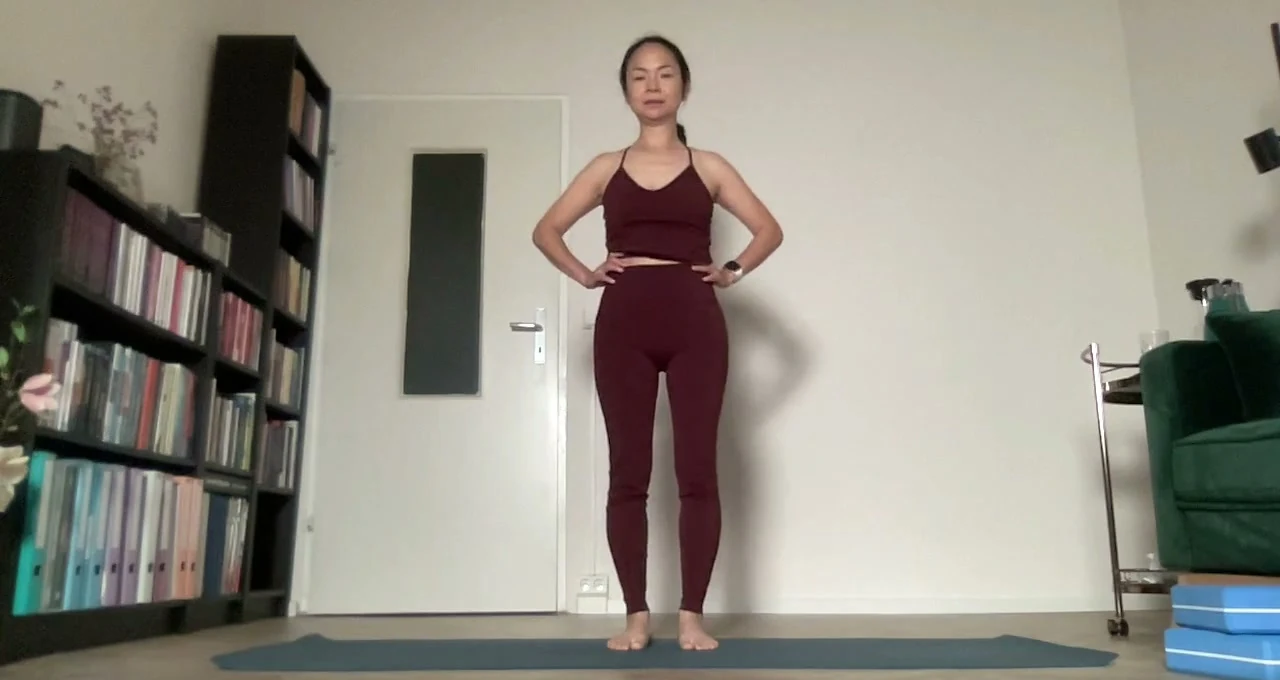
A student forgetting something already taught is different from a teacher not making the next part clear. Mix up those two things and you can explain a great deal without answering what the student is actually asking.
Make the current purpose clearWhat comes next
If you are learning to teach, practise this yourself: before choosing an exercise, explain why it belongs at this point. It does not need a long speech. One answer that meets the question can help more than reading out the whole lesson plan.
5. What would you ask next?
A small teaching exercise
The student remembers the name, but swaps two steps
Imagine this situation: you have just reviewed a short section. The student says they remember, but swaps two steps when describing it themselves. There is no physical practice in this example.
You want to find out exactly where the confusion is. What would you say next? Choose a response, then open the explanation below.
There is no score. Choose what helps you hear where the student is getting stuck.
Think through all three responses
B fits this goal most closely: focus on the part that is mixed up and let the student explain it. Listen before deciding whether to teach it again.
A offers more review, but does not yet show the teacher what is unclear. The student may end up reviewing more than they need.
C fits a moment when you are teaching again. To find out what the student remembers independently, follow it with another turn without step-by-step prompts.
No response works for every class. If something has not been taught, you can still ask what the student already knows or invite them to think first. Then explain and correct what is needed. That is part of learning, not a reason to blame them for not remembering.
6. From remembering to learning to teach
In that lesson, I also described our next step: gradually let the student remember and work through the exercise themselves, with reminders where needed. That was the direction we discussed, not something they had already achieved that day.
To lead a class, remembering names is not enough. You need to choose words, say them, hear feedback and adjust. This goes alongside observing and adjusting poses, but does not replace it.
Do not put one tick beside all three
- Recalling it independently
- You hear what the student remembers and can put into words.
- Explaining the choice
- You learn more about their understanding of its purpose.
- Guiding someone else
- They still need to watch, listen and adapt to the person practising.
The three are connected. Being able to do one does not mean being able to do the other two.
If you are considering 200-hour online yoga teacher training, ask: where will I practise explaining and guiding? Who will listen? What feedback will I get when something is unclear? You can read how the teaching practice is organised, then talk with me about what you want to learn.
What does the research help us understand?
These three lines of research help me think more carefully about questions. None of these studies measured yoga teaching.
Rosenshine, 2012 · research summary[1]
Check understanding while teaching
- The suggestion
- Invite students to explain what they have learned. Teach unclear parts again.
- The limit
- A summary of classroom research, not a trial of yoga teacher training.
Karpicke & Roediger, 2008 · Karpicke & Blunt, 2011[2] [3]
Practising recall helped on later tests
- The finding
- With Swahili–English word pairs and science texts, practising recall produced better test results after one week than the study methods compared.
- The limit
- These studies did not measure movement skills, teaching ability or the quality of a 200-hour course.
Kornell and colleagues, 2009[4]
You can ask before teaching the answer
- The finding
- In word-pair experiments, an unsuccessful attempt followed by seeing the answer could still help later learning.
- The limit
- This does not mean leaving mistakes uncorrected or asking students to try yoga techniques they have not been taught.
I use these sources to think about questions and review. They do not show that explaining something once means understanding it deeply or being ready to teach.
Common questions
Does explaining it correctly mean they understand?
It is a good sign for the part you just asked about. But they may be remembering words they have only just heard. See whether they can explain it again later, give the reason and use it in what they are learning. One answer does not tell you everything about their ability.
Should I ask after every movement?
No. Choose a useful point: something just learned, a previous mix-up, or an important choice. The aim is to find out where the student is, not turn the whole lesson into a test.
What if a student is reluctant to speak?
Start with a very small part. They could write a few notes or speak with you privately. Explain that you are looking for what needs more teaching, not judging how smoothly they speak. These are options to try, not guesses about the student in the story above.
Should students always explain while practising?
No. We used that approach in the opening scene, but it is not a rule for every technique or person. You can pause the practice, talk, then continue. A verbal explanation does not replace watching the person practise.
Explaining an idea is not the end of my job. I still want to know how the student has understood it.
Ask. Then listen.
Sources and limits
The class scenes are paraphrased from Giang's online lesson on 8 October 2026, not a verbatim transcript. The opening comparison, suggested questions, lesson map and imagined exercise were created for this article to help readers practise thinking as teachers. The photographs give context, not proof of learning outcomes. This is not a guide to practising a breathing technique.
- Rosenshine, B. (2012). Principles of Instruction: Research-Based Strategies That All Teachers Should Know. American Educator, 36(1), 12–19, 39. Read the original.
- Karpicke, J. D., & Roediger, H. L. (2008). The Critical Importance of Retrieval for Learning. Science, 319, 966–968. DOI: 10.1126/science.1152408.
- Karpicke, J. D., & Blunt, J. R. (2011). Retrieval Practice Produces More Learning than Elaborative Studying with Concept Mapping. Science, 331, 772–775. DOI: 10.1126/science.1199327.
- Kornell, N., Hays, M. J., & Bjork, R. A. (2009). Unsuccessful Retrieval Attempts Enhance Subsequent Learning. Journal of Experimental Psychology: Learning, Memory, and Cognition, 35(4), 989–998. DOI: 10.1037/a0015729.

Giang Hoang
Yoga teacher, E-RYT 500 & YACEP (Yoga Alliance)
Giang Metta Academy: RYS 200 & RYS 500 (YA ID 442630)
Based in Da Lat, Vietnam. Teaching online worldwide.