Online Yoga Teacher Training Courses
500H pathway (200H + 300H): 200H Foundation followed by 300H Restorative. Interactive online delivery with live mentoring on Zoom.
Prefer to learn in the studio? See the in-person 200-hour training in Da Lat, Vietnam.
The 200H, 300H, 500H and 100H Hatha Yoga Train the Trainer courses follow the same curriculum, learning outcomes and assessment requirements online and in person in Da Lat. Teaching delivery, schedules and tuition depend on the format. Explore the other format.
See how the 200H course teaches you to lead a class
See how the 300H course teaches restorative yoga

200-Hour Yoga Teacher Training
Hatha & Organic Alignment, functional biomechanics, 8-limbs Ashtanga philosophy, and teaching methodology. Group 3+: 26.000.000₫. Online intakes: January, March, May, July, September and November.
Before you enrol: school certificates and Yoga Alliance registration explained.
Private 1:1: 34.000.000₫ (no EB)

300-Hour Advanced Restorative Yoga
Restorative yoga, props engineering, trauma-informed teaching, somatics and two teaching case studies within a non-medical scope. Group 3+: 34.000.000₫. Online intakes: April, August and December.
Private 1:1: 44.500.000₫ (no EB)

500-Hour Pathway (200H + 300H)
Comprehensive pathway combining 200H Foundation + 300H Advanced Restorative. RYT 500 registration is a separate application subject to Yoga Alliance requirements. Group 3+: 52.000.000₫; Early Bird: 46.800.000₫ (10% off for the first 3 registrants in each group class; no Early Bird discount for private 1:1).

100-Hour Hatha Yoga Train the Trainer Educator Certification
Design training courses, practise teaching demonstrations and learn to mentor future teachers with Giang. For experienced yoga teachers who have completed at least 500H of teacher training.
Online intakes: February, June and October. Certificate meeting Yoga Alliance (USA) and IPHM (UK) standards.
Private 1:1: 26.000.000₫ (no EB)
200H Online series
Learn how to teach yoga through the 200H Online series
Each article answers one teaching question: planning a sequence, cueing, observing, checking understanding or explaining a pose. Pick the group you are unsure about and start there.
1You can do the poses. What do you say in front of a class?
What a teacher does in class: plan the route, speak clearly, observe and listen for what is unclear.
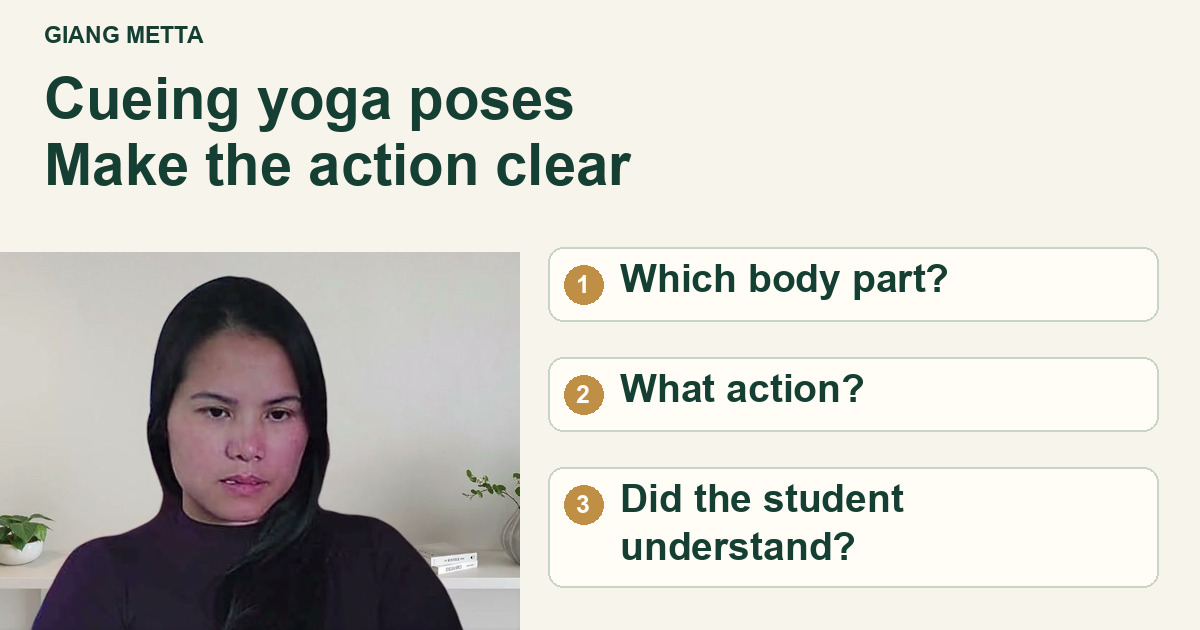 How to cue yoga poses so beginners can follow
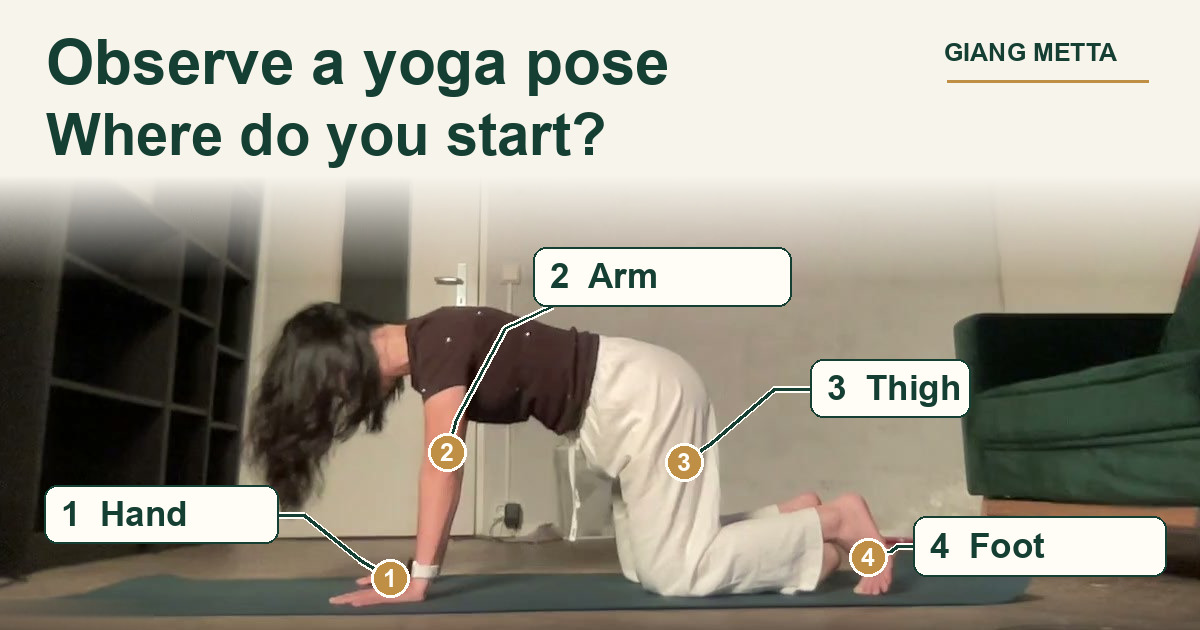 How to observe and adjust a student’s pose
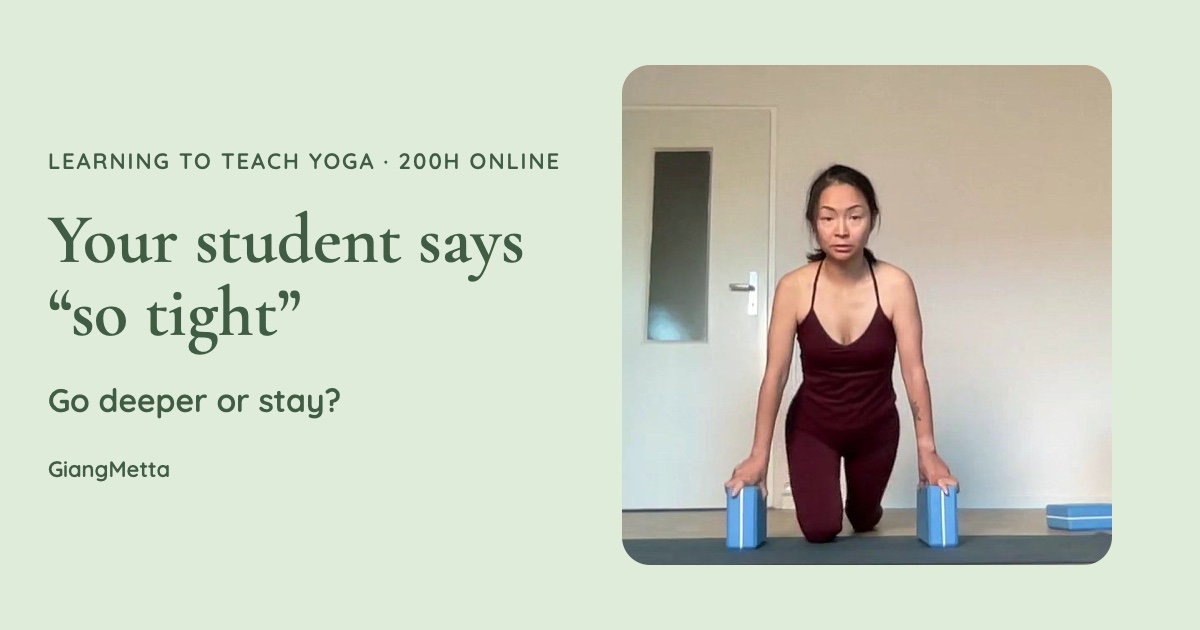 When a yoga student says “it’s so tight”: go deeper or stay?
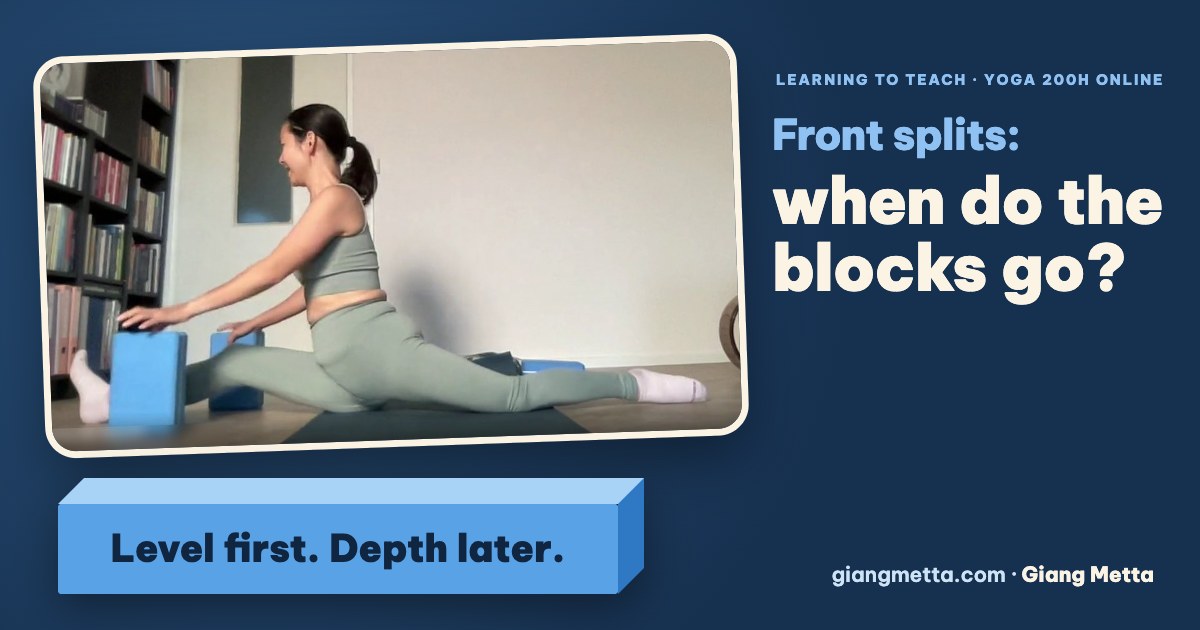 Front splits: when to let go of the blocks?
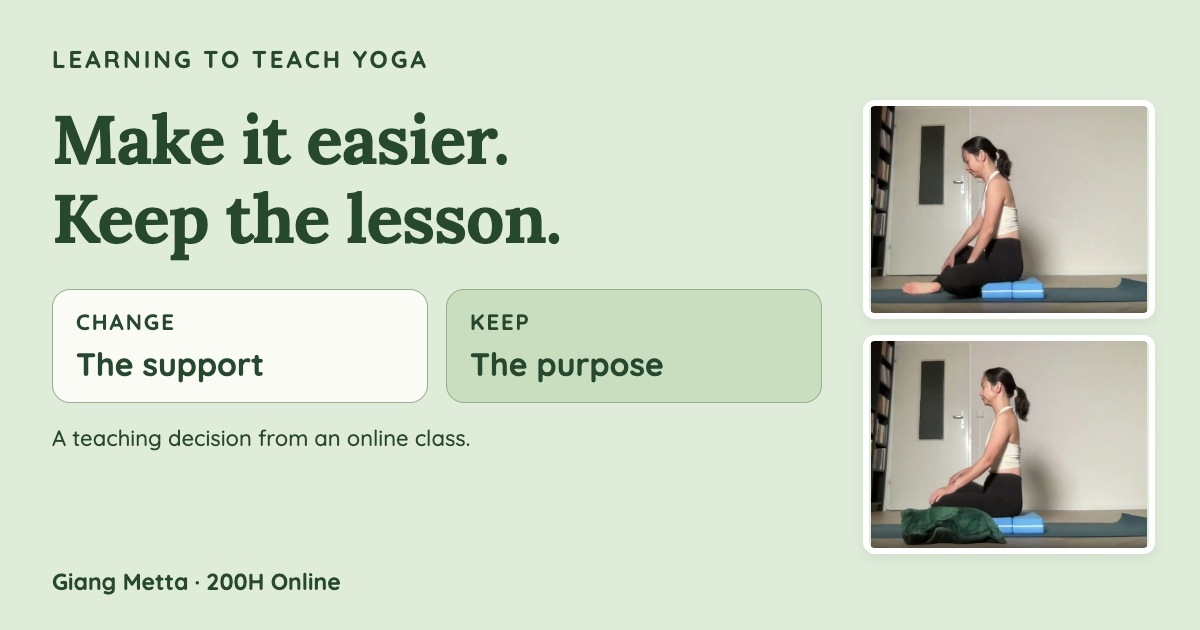 How to modify a yoga pose without losing the lesson
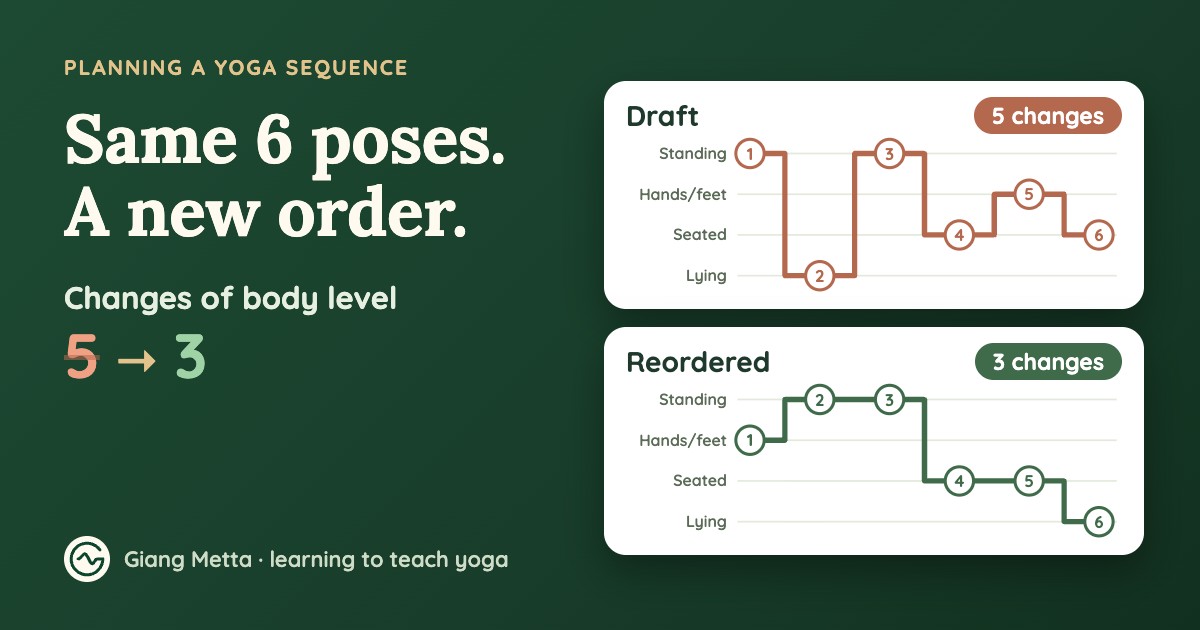 How to sequence a yoga class: more than a list of poses
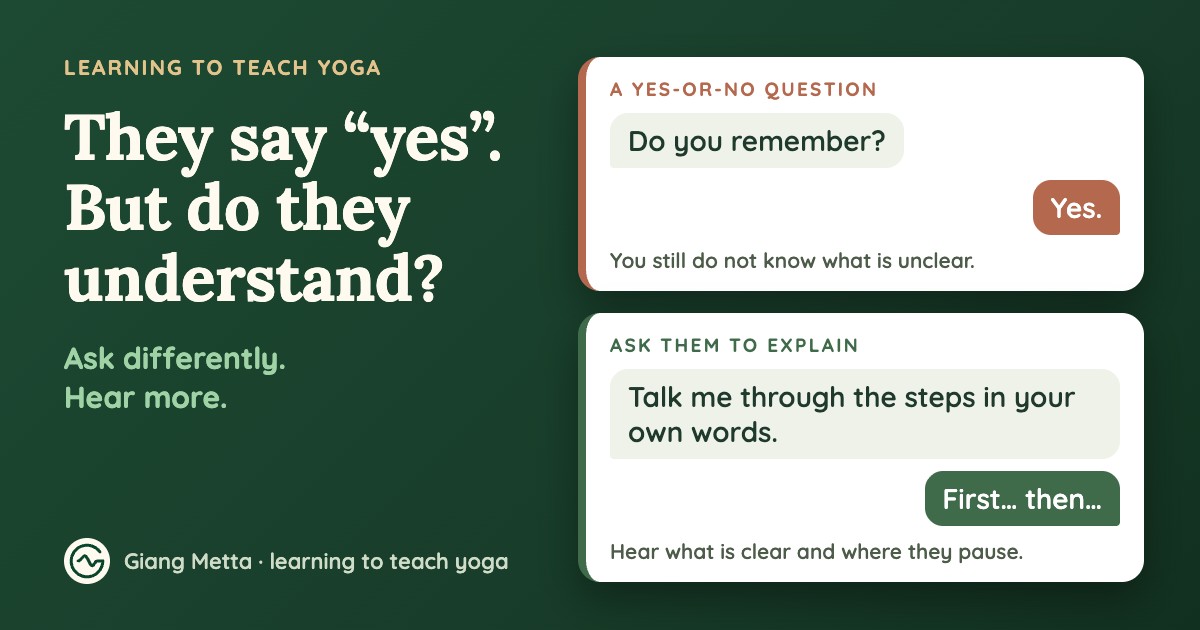 How can you tell if a yoga student understands?
2You know the pose. Can you explain why?
Students often ask “why do I do it this way?”. A teacher needs an answer.
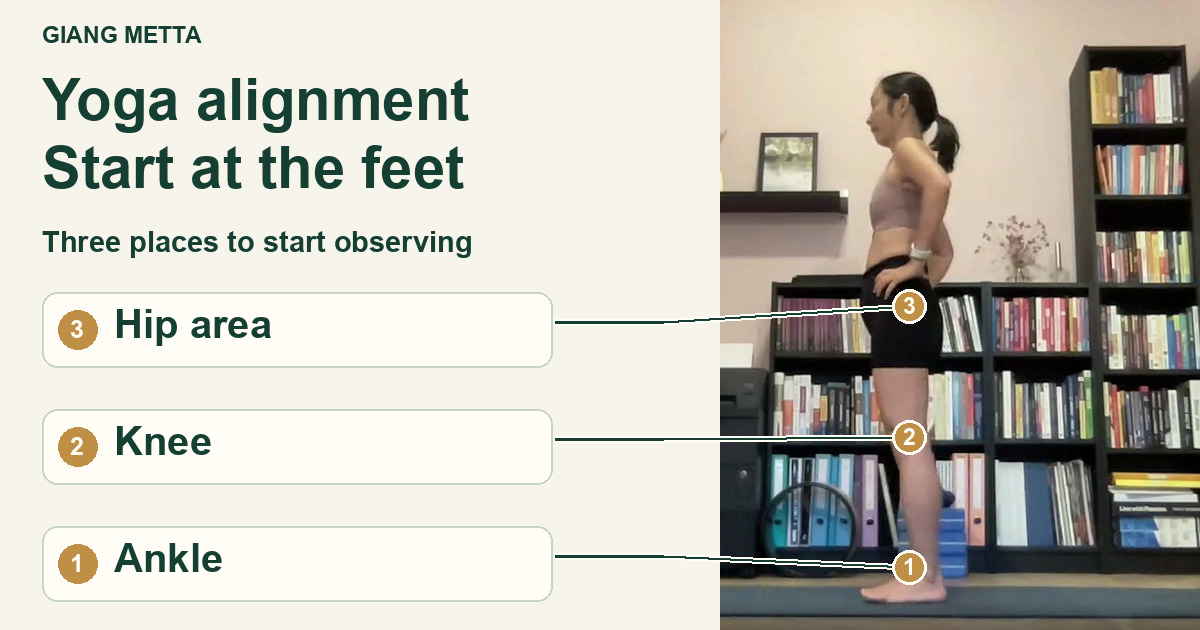
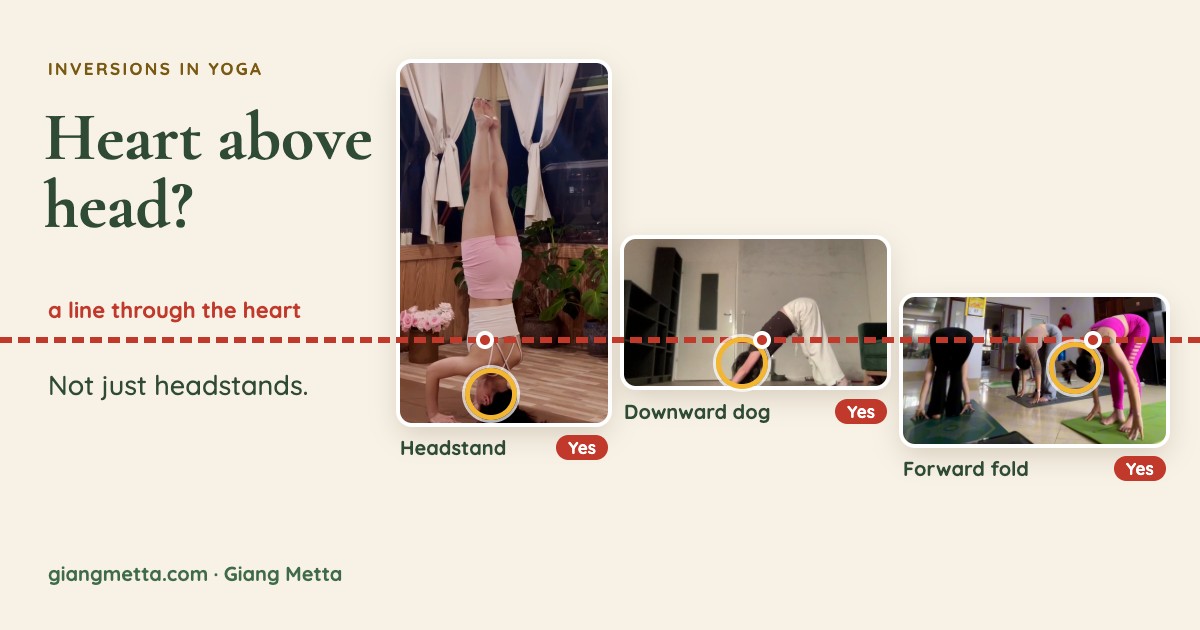


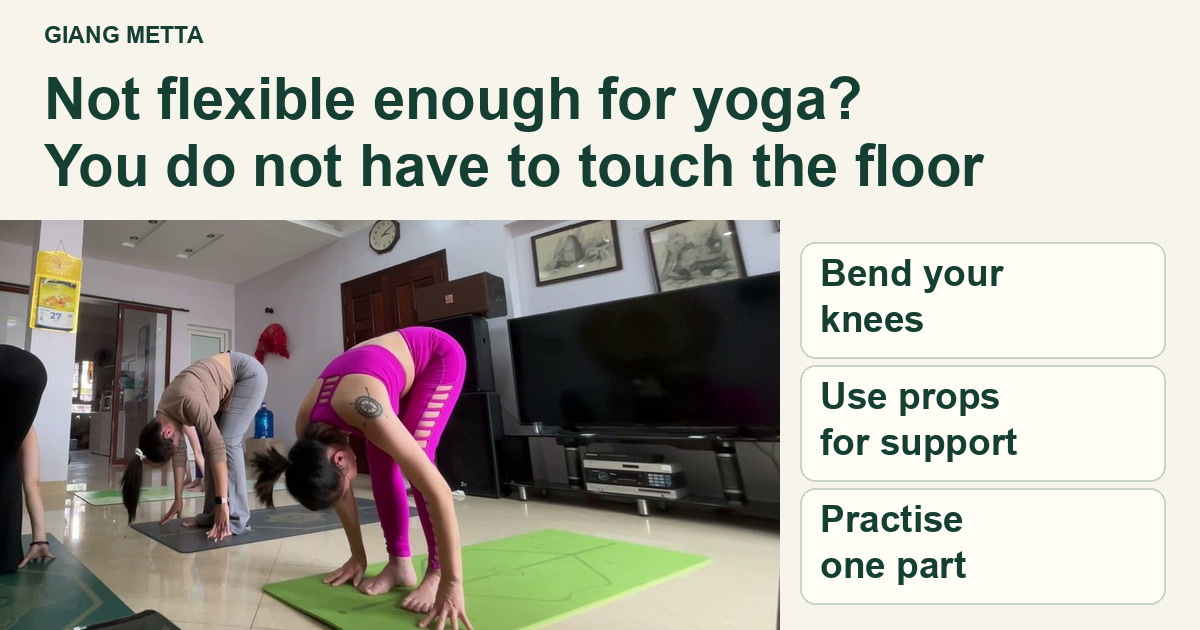
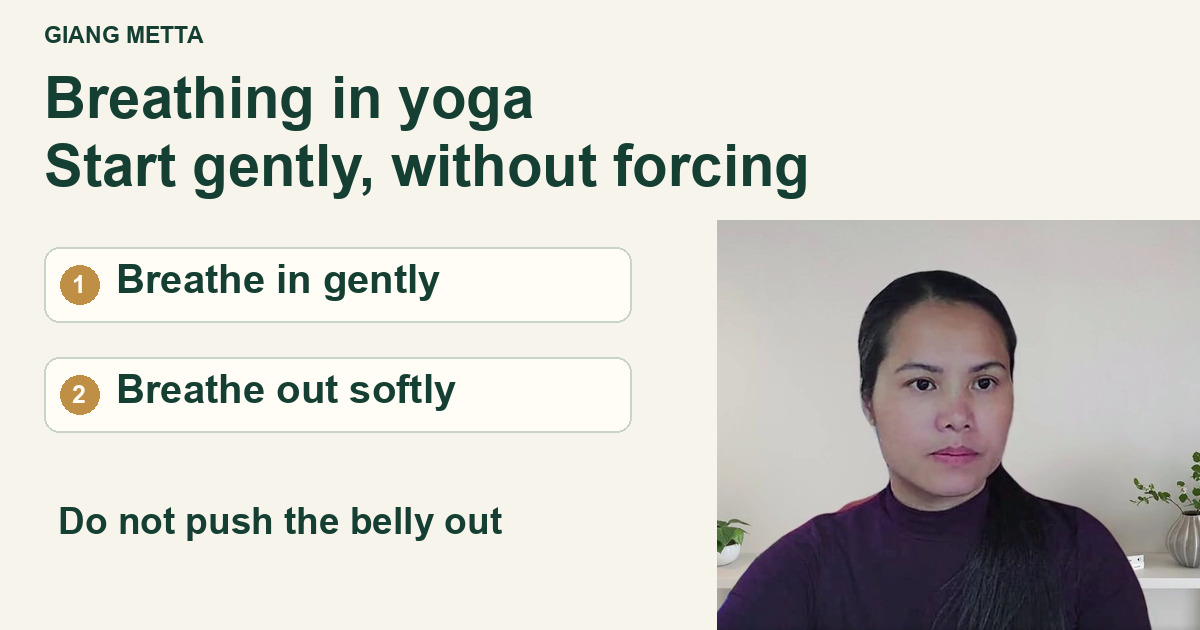
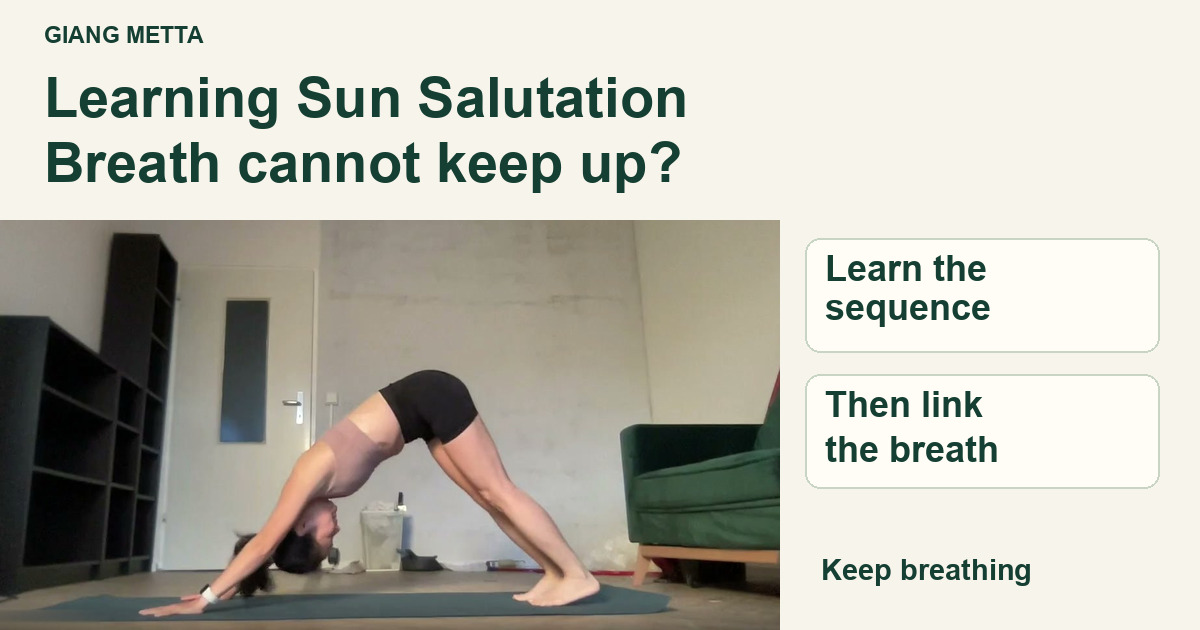
3Still stiff, breath not steady: can you learn to teach?
A common worry before people sign up. These three start from your own body.
300H Online series
Teach restorative yoga through the 300H Online series
Articles from the 300H Online class, with real clips from the lesson. Pick the group you are unsure about and start there.
1A student is tired. Does “just relax” work?
Restorative yoga starts with listening: what the body is saying, and which cue helps someone let go.


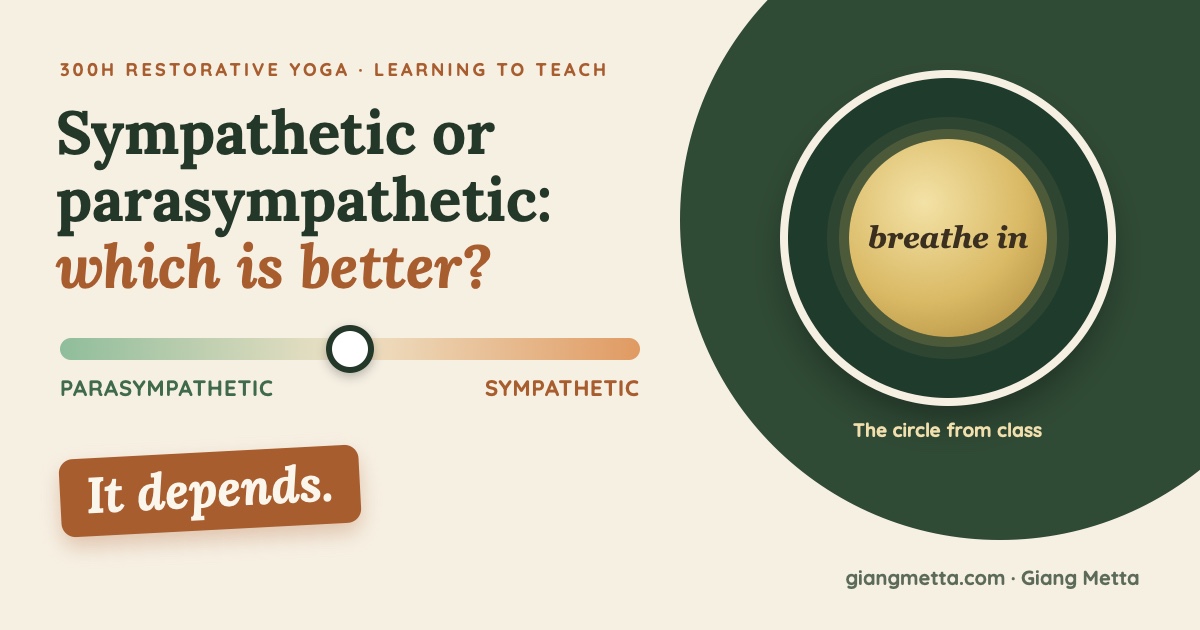
2Sympathetic or parasympathetic: good and bad, or “when”?
A teacher looks at the state the student is in now, without labels like good or bad.
3Block, blanket, bolster: where does it go, what job does it do?
Read the gap first, choose the prop second, try it yourself before you teach it.

4Yin or restorative: how much effort is this student still making?
Look at the student’s effort, not at the props. Then ask what they need and what they enjoy.

5A student says it hurts: what do you ask before class?
Ask if they have seen a doctor and what the doctor said. Know when you can teach and when to stop.

International Admissions & Consultation
Enrollment is conducted strictly via direct consultation. We do not use automated online checkouts.
💳 International Payment Note: All tuition fees are listed and charged in Vietnamese Dong (VND). After your enquiry, Giang confirms the payment details with you directly; for international transfers, your bank applies its own exchange rate and fees.