What is an inversion in yoga? Not just headstands
We had just finished the balance poses, so next came inversions. Before I explained anything, I asked my student: after all your years of practice, what do you think an inversion is?
She answered right away: headstand.
True. But that is one example.
A little later she asked, not very sure: so is wheel an inversion too? I said yes. Then she worked it out herself: oh, so any pose where the heart is higher than the head.
Once she had the rule, the rest was easy. She named bridge and downward dog. I didn’t name a single pose.
Quick answer: inversions in yoga
- Heart higher than head means inversion. That simple rule is enough to spot one yourself.
- Not just headstands. Downward dog, standing forward fold, bridge and wheel also bring the head below the heart.
- One pose can belong to two groups. Wheel is a backbend and an inversion.
- Looks easy, still an inversion. A small study found eye pressure rose even in downward dog.
- Eye problems, high blood pressure, heart disease, neck problems or pregnancy: ask your doctor first.
- When teaching: ask for the rule first, name the poses after.
What is an inversion in yoga? The simple version
An inversion is any pose where your heart is higher than your head.
Said another way: the head is below the heart. Many yoga sources use a definition close to this.
It doesn’t ask for legs in the air. It doesn’t ask you to stand on your head or your hands. You only look at one thing: where is the head compared with the heart?
I like this plain version because students can take it home and use it. Meet a new pose, ask one question, and you know if it belongs to this group.
One pose can sit in two groups. Wheel is a backbend. The head is below the heart, so it is also an inversion. We group poses to understand the body, not to argue about names.
Draw a line through the heart
Guess first. Then tap the photo.
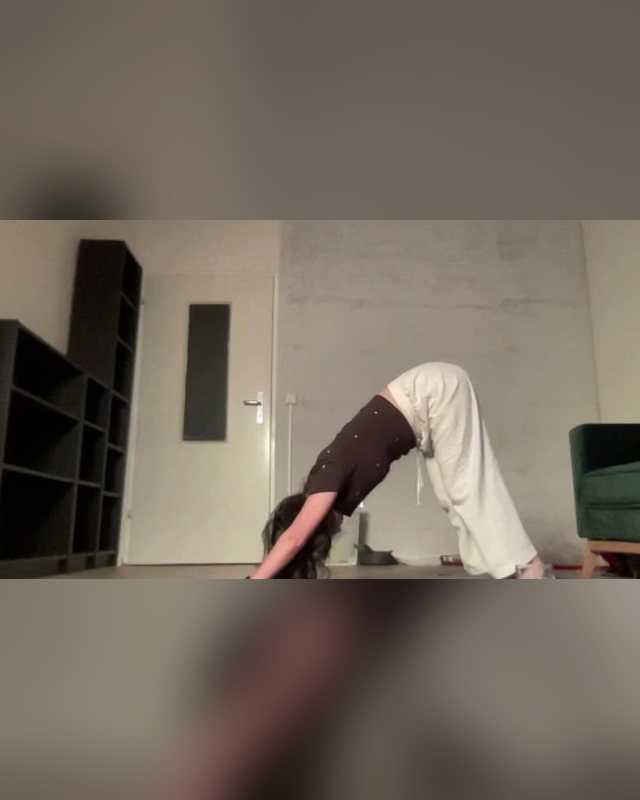 Downward dogHeart above head?
YesLooks easy, but the heart is higher than the head. Many people forget this one.
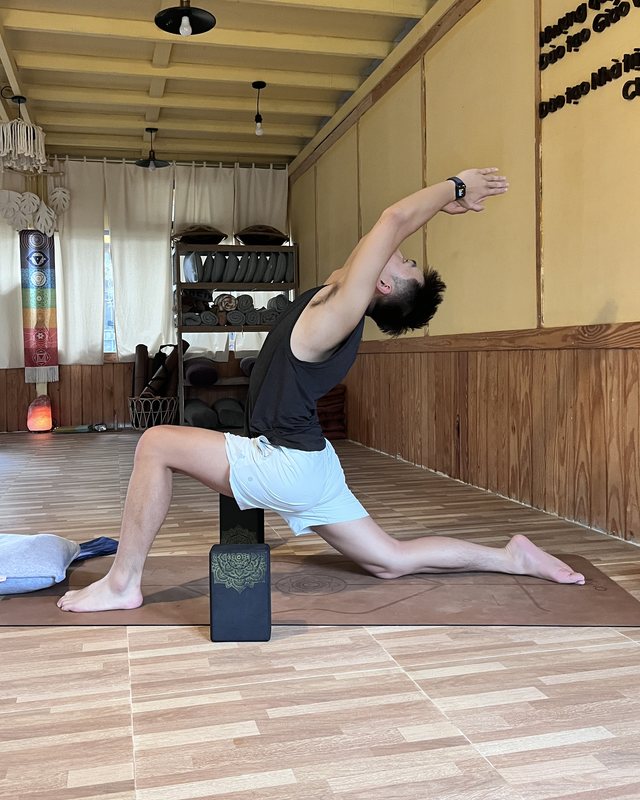 Low lunge, arms upHeart above head?
NoThe heart is lower than the head. Arms up and a slight backbend still don’t make it an inversion.
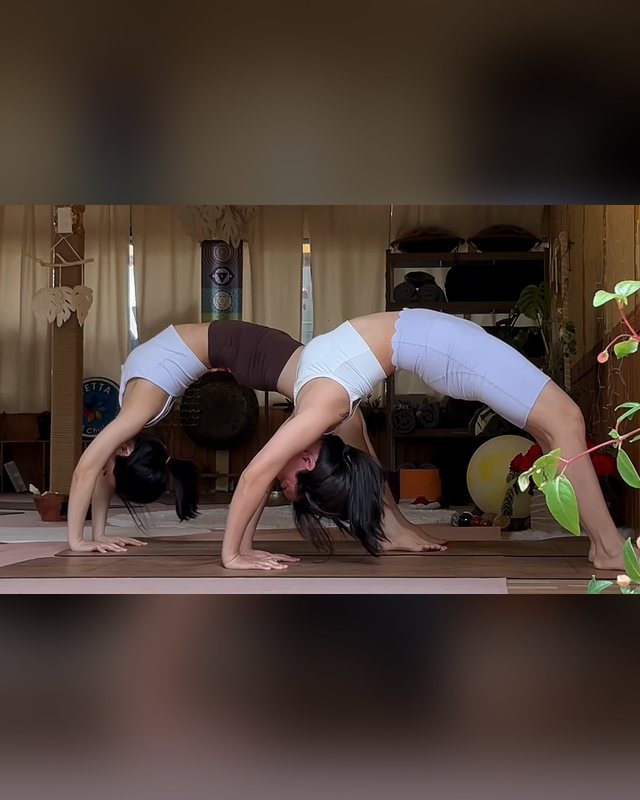 WheelHeart above head?
YesA backbend, and an inversion too. This is where the student paused.
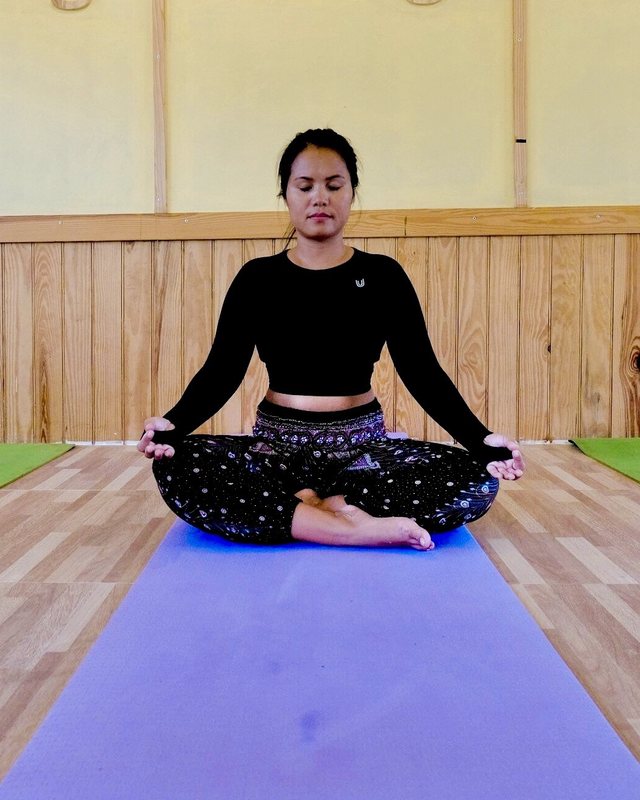 Seated meditationHeart above head?
NoThe heart is lower than the head. Put it next to downward dog and you see the difference at once.
Photos from different practice sessions. The lines are estimated by eye, not measured.
Why I ask before I explain
Reading a definition to a student takes ten seconds. Asking first takes longer. That day, a one-line definition took several minutes.
But once she had the right definition, she remembered the poses very accurately. Bridge and downward dog came from her. I hadn’t named them.
- Ask how the student understands it now. The first answer is usually an example, not a rule.
- Wait for the point where they get stuck. That day it was wheel: it doesn’t look like a headstand, but it seems to belong here.
- When the student says the rule, confirm it, then ask for more examples that fit the rule.
A nod doesn’t prove a student understands. If they can find new examples on their own, you can be more sure. I wrote more about this in How can you tell if a yoga student understands?
Understand first, then practise: slow but on the right road
After that, I told her something I say often: understand the idea clearly, then practise by it. That’s how practice becomes right.
If the idea is vague and you just do whatever you’re told, you practise without knowing if you are right or wrong.
That day I borrowed a saying passed down in Buddhist teaching. Roughly: walking the right road slowly, even a bit lazily, is better than walking the wrong road with great effort. On the wrong road, the harder you try, the further you go.
With inversions, what does the wrong road look like? Practising headstand very hard, but not knowing that downward dog also brings your head down.
Practise correctly. That’s enough. It’s not about a pretty pose.
Who should ask a doctor before practising inversions?
Here I don’t go by feeling. Yoga Journal has an article that answers exactly this: when not to invert.1 The conditions it lists:
- Eye conditions: glaucoma, detached retina, severe nearsightedness.
- High blood pressure, heart disease.
- Diabetes or insulin resistance.
- Cervical spondylosis (wear in the neck).
- Ear or sinus infection or congestion.
- Pregnancy after the first trimester.
If you feel pressure or pain in your head, eyes, ears or neck during the pose, come down right away.
A small study2
20 people (10 with glaucoma, 10 without) held four head-down poses, 2 minutes each. Eye pressure rose in all four.
What it can’t tell us: a very small group, measured for only a few minutes, blood pressure not measured, and no answer on whether long-term practice makes the disease worse.
Looks easy, still an inversion.
Downward dog, a pose many people do in almost every class, raised eye pressure the most of the four poses measured.
This article doesn’t diagnose anyone. If you have one of the conditions above, ask the doctor who knows your case. Bring the names of the poses so you can ask clearly.
When teaching: 4 things to do with inversions
- When you plan a class, mark every pose with the heart above the head, not only headstand.
- Before class, ask about eyes, blood pressure, neck and pregnancy.
- Always give an option that keeps the head no lower than the heart. For example, stay on hands and knees instead of downward dog.
- Teach this group with the rule first, the pose names after.
If someone doesn’t want to share their health story, don’t push. Just offer the head-up option to the whole class.
Questions about inversions
Is downward dog an inversion?
Yes, if an inversion means the heart is higher than the head. It is a mild one. But in the small study above, it was the pose that raised eye pressure the most.
Is legs up the wall an inversion?
You lie on your back with your legs on the wall, so the head is only a little lower than the heart. It is close to the line. In the study, eye pressure still rose, but the least of the four poses.
Are wheel and bridge backbends or inversions?
Both. Look at the spine and it’s a backbend. Look at the head compared with the heart and it’s an inversion. To prepare for wheel step by step, see Can’t do wheel pose yet? What to practise first.
Can I do inversions with high blood pressure?
Ask your doctor first. High blood pressure is on the list of conditions to be careful with in the Yoga Journal article. A yoga teacher doesn’t make that call for your doctor.
Does everyone who practises yoga need to do a headstand?
No. Understanding the inversion group doesn’t mean you must do the hardest pose in it. Practising in a way that fits your body is enough.
Learning to teach is learning to ask
A one-line definition. A few minutes for the student to find it herself.
The 200-hour online yoga teacher training has a section on safe inversions. Understand the idea first, practise it, then practise guiding someone else.
Understand first. Then practise.
Yoga Journal, “Ask the Teacher: When Not to Invert?”, updated July 1, 2025. yogajournal.com ↩
Jasien JV, Jonas JB, de Moraes CG, Ritch R. Intraocular Pressure Rise in Subjects with and without Glaucoma during Four Common Yoga Positions. PLOS ONE 2015;10(12):e0144505. doi:10.1371/journal.pone.0144505 ↩
Sources and limits of this article
The conversation about the definition comes from a one-to-one online class with Giang on Google Meet, 12 October 2026. The class audio was transcribed by machine and cross-checked several times. The article retells the ideas; it does not quote word for word. The pose photos come from other practice sessions, not from this class. The lines on the photos are estimated by eye. The list of conditions and the eye-pressure study follow the sources in the notes. This article is not medical advice.

Giang Hoang
Yoga teacher, E-RYT 500 & YACEP (Yoga Alliance)
Giang Metta Academy: RYS 200 & RYS 500 (YA ID 442630)
Based in Da Lat, Vietnam. Teaching online worldwide.