Sun Salutation for Beginners: What If Your Breath Can't Keep Up?
In the middle of a Sun Salutation, my student was in downward-facing dog. She turned her face to the camera and said she couldn't keep up with the breath.
I answered straight away: just breathe normally.
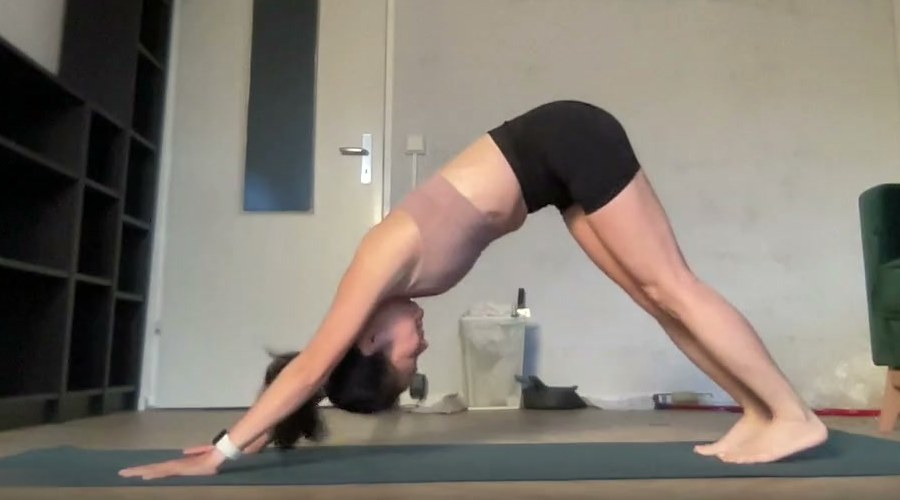
At the end of the sequence, I asked her to walk gently around the mat, like after a run. She said she was tired. Then she asked a question I think many beginners want to ask: do you have to breathe that fast when you practise?
For beginners, the answer is no.
I wrote this for you if you've ever followed a Sun Salutation video and found yourself out of breath, out of rhythm, or wondering if you were doing it wrong.
In short
- When you're new to Sun Salutation and can't yet link breath with movement, I suggest slowing down, breathing normally, and learning the order of the poses first. Add the breath later.
- Don't hold your breath, and don't breathe hard to keep up with the teacher's count.
- Sun Salutation doesn't have one fixed intensity. Same name, but it can be gentle or quite hard, depending on speed and how it's done.
- If you feel dizzy, pain, or unusual discomfort, stop, sit down to rest, and get up slowly. Don't push for one more round.
In this article
- 1. Why can the body keep going when the breath can't?
- 2. Is breathing normally doing it wrong?
- 3. So how do you remember when to breathe in and out?
- 4. Is Sun Salutation gentle or hard?
- 5. Which steps are in the sequence in my class?
- 6. When should you stop?
- 7. Learning Sun Salutation when your breath can't keep up yet
- 8. Learning to teach: the teacher changes the cue, not the student's breath
- Questions beginners often ask
- Last words
- Read more
- References
1. Why can the body keep going when the breath can't?
When she asked if she had to breathe that fast, I explained: that day I was leading the sequence for fitness, with quick movement. For people training to teach, that speed is normal in my class. But a beginner who isn't used to linking breath and movement should just breathe normally.
Your body may already be able to move fast. Your breath isn't there yet.
Fitting one breath to one movement is its own skill. When you're learning, your head is busy remembering which foot goes back, where your hands go, which pose comes next. Adding timing every breath in and out to each call is too much at once.
So when she said she couldn't keep up, I didn't make her chase the count at all costs. From then on, I mostly called the name of the movement and which leg, and reminded her a few times: breathe normally.
2. Is breathing normally doing it wrong?
No. When a beginner can't yet link breath with the Sun Salutation sequence, I let them breathe normally and slow down. I don't force them to follow the count.
Even during the neck warm-up before that, she had asked whether she needed to know exactly when to breathe in and when to breathe out. I answered: usually, looking up is breathing in, looking down is breathing out. But if it's hard to remember or you're not used to linking them yet, just breathe normally.
From my teaching experience, if a beginner keeps breathing steadily, that's already good. Forcing beginners to match the count often makes them more tense. And when you're tense, breathing gets harder.
Research doesn't treat normal breathing as "doing it wrong" either. In a 2026 study on fast and slow Sun Salutation, participants were told to keep breathing normally throughout the sequence.1 That study didn't compare normal breathing with breathing to a count, so I'm not saying one is better. I'm only saying: breathing normally is a valid choice.
3. So how do you remember when to breathe in and out?
Try it now, before you read on
Sit up tall. Raise both arms and lower them, very slowly, three times. When do you naturally breathe in?
As my arms go up: that matches the pattern I often cue: opening and reaching up is usually breathing in.
As my arms come down: that's fine. Try once more, breathing in as your arms go up. If it's hard, just breathe normally.
I didn't notice, I just breathed: good. For beginners, steady breathing matters more than matching the count.
I got confused: that's why section 2 says breathing normally isn't wrong. Learn the movements first, add the breath later.
There's no right or wrong answer. If you feel dizzy, stop and breathe normally.
Once you know the order of the movements, you can try linking breath with a simple pattern I often cue:
- Opening, reaching up, looking up: usually breathe in.
- Folding, bending down: usually breathe out.
The word "usually" matters here. If a movement takes longer than one breath, take another breath. If you're out of breath, breathe normally and link it again later. No breath is a deadline the movement has to finish before.
I write more about the basics of breathing in how to breathe in yoga.
4. Is Sun Salutation gentle or hard?
As we talked after the sequence, she shared how she understood it: Sun Salutation is usually done gently, to warm the body up little by little.
She's right about many regular classes: there, Sun Salutation is often used that way. In my teacher training, there are sessions where I lead it fast to build fitness, and I watch every round on screen.
Studies show exactly this: same name, very different intensity.
Three studies: Sun Salutation has no fixed intensity
The studies below have different groups of people and different ways of measuring. They are not three levels for you to rank yourself.
2016 · Review of many studies
Most yoga sessions were light, but some sequences reached moderate or vigorous intensity. The highest value recorded was for a Sun Salutation sequence.2
2011 · Only six young, healthy people with over two years of practice
Over four rounds, average heart rate was about 80% of the estimated age-based maximum.3 This isn't a group of beginners, and it isn't a level you need to reach.
2026 · Fast versus slow Sun Salutation
Going slowly gave lower heart rate and oxygen use than going fast in many poses. Results varied by pose.1
What I want you to remember: speed is something you can adjust. If you're out of breath, slow down. Don't breathe harder to catch up.
I also want to be clear: the speed in the lesson I describe is the pace of a teacher training class, with me watching on screen. I don't suggest you practise at home at that speed, with that number of rounds or that progression.
5. Which steps are in the sequence in my class?
Sun Salutation: the 10 steps in the lesson I describe
There are many versions of Sun Salutation. This is the order from one lesson with me watching on screen. It's not the only correct version, and not a self-practice guide to replace a teacher. Use it only to review if you've already been taught each pose.
Before starting, she stood at the front of the mat, facing forward, with about one foot's length of mat in front of her.
If you can't link them yet: just breathe normally. Once you know the movements, you can try breathing in as you raise your arms and out as you fold down. Where it doesn't fit yet, link it later. Don't hold your breath to keep the count.
The count in the lesson: the labels below record when I called breathe in or breathe out. At step 5 I called a breath hold; beginners don't need to follow that. Just breathe normally.
- Raise both armsBreathe normally; once it's familiar, try breathing in as you reach up.In the lesson: breathe in.
- Fold forward, hands on the mat beside your little toesBreathe normally; once it's familiar, try breathing out as you fold.In the lesson: breathe out.
- Step one foot back, front knee at a right angleBreathe normally.In the lesson: breathe in.
- Step the other foot back into plankBreathe normally.In the lesson: breathe out.
- Lower knees, chest and chin to the mat (eight points touching the floor)Breathe normally. Don't hold your breath.In the lesson: I called a breath hold. Beginners: breathe normally, don't hold.
- Rise into cobraBreathe normally.In the lesson: breathe in.
- Tuck your toes, move back to downward-facing dogBreathe normally.In the lesson: breathe out.
- Step the front foot forward between your handsBreathe normally.In the lesson: breathe in.
- Bring the other foot forwardBreathe normally.In the lesson: breathe out.
- Raise both arms, lean back gentlyBreathe normally.In the lesson: breathe in.
The next round switches the leading leg, so both sides get the same practice.
Remember the order of the movements first, link the breath gradually later. Don't force yourself to match the lesson's count. If you feel dizzy, pain or unusual discomfort, stop.
To be honest, that day I also called the order wrong once: I called chest and chin down first, then corrected straight away to knees, chest, chin. The person leading needs time to say it smoothly. The person practising needs even more.
In the first round, I also stopped to correct details: was the back foot pointing the right way, were the shoulders steady while switching legs, the elbows in cobra (she got the soft elbows right straight away). Those details need someone watching you practise, so I don't turn them into a formula here. How I observe and adjust each pose is in how to observe and adjust a student's yoga pose.
6. When should you stop?
Before the first round, I told her: if you feel tired and dizzy, stop. After the first round, I asked again whether she felt dizzy. She said no.
That "no" was hers, at that moment. It doesn't mean this sequence never makes anyone feel unwell.
Dizzy during practice: stop, see a doctor, or get emergency help?
Choose the case that matches your signs. These are not three steps to do in order.
Get emergency help now
Severe dizziness with chest pain, serious difficulty breathing, fainting, weakness on one side of the body, or trouble speaking: call your local emergency number or ask someone to take you to the nearest emergency department.6
Dizziness that keeps coming back or lasts: see a doctor
Dizziness has many causes. A yoga teacher can't diagnose the cause from a moment on the mat, and neither can this article. If dizziness keeps coming back or lasts, get checked.
Dizzy while practising: stop and rest
If you stopped because you felt dizzy, don't do another round that day just to finish.
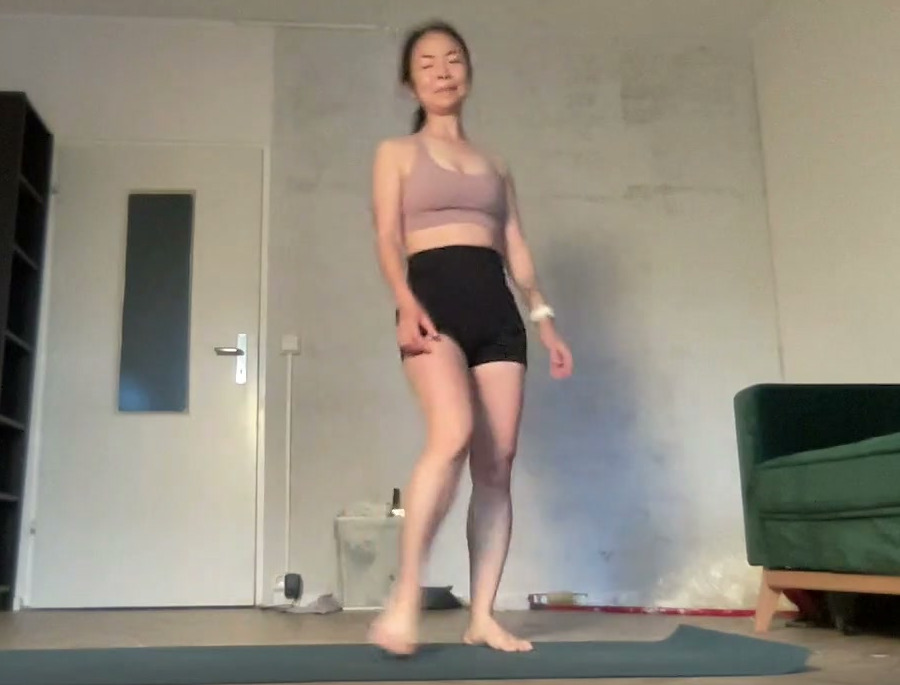
After the sequence, I asked whether she felt warmer and looser. She said yes.
I added: for a first day, that's enough. Doing more means sore muscles tomorrow, and then you have to skip practice.
7. Learning Sun Salutation when your breath can't keep up yet
If a teacher has already taught you each pose and you're reviewing at home, this is how I suggest linking the sequence. Only link poses you already know how to enter and leave. If you don't know a pose yet, learn it with a teacher first. Don't use the 10-step list above to try it for the first time on your own. This is a step-by-step way to learn, not a path research has proven to be best.
- Learn the order first, breathing normally. Go very slowly. Just remember which pose comes after which.
- Split the sequence into sections. For example: section one from raising your arms to stepping back; section two from eight points on the floor to downward dog; section three from stepping forward to raising your arms. When one section feels familiar, link it to the next.
- Need another breath? Take it. Don't hold your breath to keep the rhythm. Don't force a movement to finish in exactly one breath.
- Try breathing in as you reach up, out as you fold down. Once the movements feel familiar, you can start linking breath at these two points. Where it doesn't fit yet, breathe normally.
- Out of breath? Slow down, or stop. Slowing down is an adjustment, not a failure.
- Dizziness, pain or unusual discomfort: stop completely.
If you are pregnant, older, or have a health condition, for example severe high blood pressure, trouble with balance, glaucoma, lower back problems, or knee or hip injuries, ask a doctor or health professional first, and practise with a teacher who knows your situation.7 This article doesn't replace that advice.
8. Learning to teach: the teacher changes the cue, not the student's breath
Watching her move, I couldn't tell how messy her breath was inside. Only when she said it could I change something. When you teach, make sure your students feel allowed to say that.
And when they say it, the teacher's job is to change how they lead: fewer breath counts, name the movement, slow down, offer a rest. Not call the count louder. I write about practising clear cues in how to cue yoga poses.
Learning to lead a sequence also needs practice with real people. In my 200-hour online yoga teacher training, besides 80 hours of live guidance with me on Zoom, there are 60 hours of teaching practice. You invite people and lead them; I watch you teach live on Zoom and give feedback.
A certificate of completion and registering as an RYT 200 with Yoga Alliance are two different things. More in online yoga teacher training and Yoga Alliance.
Questions beginners often ask
Should beginners do Sun Salutation?
Many beginners can, if they go slowly, breathe normally and have easier options for the harder poses. If you have a health issue, ask a health professional first.
Does each movement have to match exactly one breath in or out?
Not necessarily. While you're learning, if you need another breath, take it.
How many rounds are enough?
I don't give one number for everyone. The rounds in my teacher training are for learners I'm watching, not a target for people practising alone. Start with a few, and stop while it still feels comfortable.
Is breathing hard and fast during practice better?
Don't push for it. Beginners should avoid forceful breathing.7 Breathing too fast and hard can also make you light-headed.
What should I do if I feel dizzy after practice?
Sit or lie down until it passes, then get up slowly. If it keeps happening, see a doctor. If it comes with chest pain, serious difficulty breathing, fainting or weakness on one side, get emergency help.
Last words
She asked if practising means breathing that fast. That question helped me say something clearly that the counting in class can easily make beginners misunderstand.
The count is there to guide, not to compete. When the breath can't keep up, the first person to change is the one leading: slow down, say less, offer a rest. And you, just keep breathing.
Just breathe normally.
Read more
- How to breathe in yoga
- How to cue yoga poses so beginners can follow
- How to observe and adjust a student's yoga pose
References
How I teach the sequence comes from my own classes. The sources below are for further reading on Sun Salutation intensity, dizziness and safety.
-
Majhi S, Das A, Bhargav H, Vidyapradananda S (2026). Mapping Cardiorespiratory and Metabolic Demands across Fast and Slow Surya Namaskar Sequences. International Journal of Yoga, 19(2), 167–178. DOI: 10.4103/ijoy.ijoy_233_25. 20 healthy men; the study's own definition of fast and slow, not a recommended pace for beginners. ↩↩
-
Larson-Meyer DE (2016). A Systematic Review of the Energy Cost and Metabolic Intensity of Yoga. Medicine & Science in Sports & Exercise, 48(8), 1558–1569. DOI: 10.1249/MSS.0000000000000922. 17 studies with different protocols, so one level can't be given to every Sun Salutation. ↩
-
Mody BS (2011). Acute effects of Surya Namaskar on the cardiovascular & metabolic system. Journal of Bodywork and Movement Therapies, 15(3), 343–347. DOI: 10.1016/j.jbmt.2010.05.001. Six people aged 18–22 with over two years of practice; one session measured. ↩
-
NHS. Dizziness. Guidance page. General guidance, not specific to yoga. ↩
-
Cambridge University Hospitals NHS Foundation Trust. Hyperventilation. Patient information. About over-breathing in general; it doesn't estimate how often it happens in yoga. ↩
-
Mayo Clinic Staff. Dizziness: Symptoms and causes. Mayo Clinic page. Used for the emergency signs. ↩
-
National Center for Complementary and Integrative Health (NIH). Yoga: Effectiveness and Safety. NCCIH page. Not a complete list of contraindications for every Sun Salutation variation. ↩↩

Giang Hoang
Yoga teacher, E-RYT 500 & YACEP (Yoga Alliance)
Giang Metta Academy: RYS 200 & RYS 500 (YA ID 442630)
Based in Da Lat, Vietnam. Teaching online worldwide.