Front splits: when to let go of the blocks?
Every time I demo the splits for students, I pick my good side.
I confessed this in the middle of a class, right after my student got down on one side. That moment is at the end.
Before that came ten minutes on one mat. Blocks in. Blocks out. Blocks back in.
Quick answer
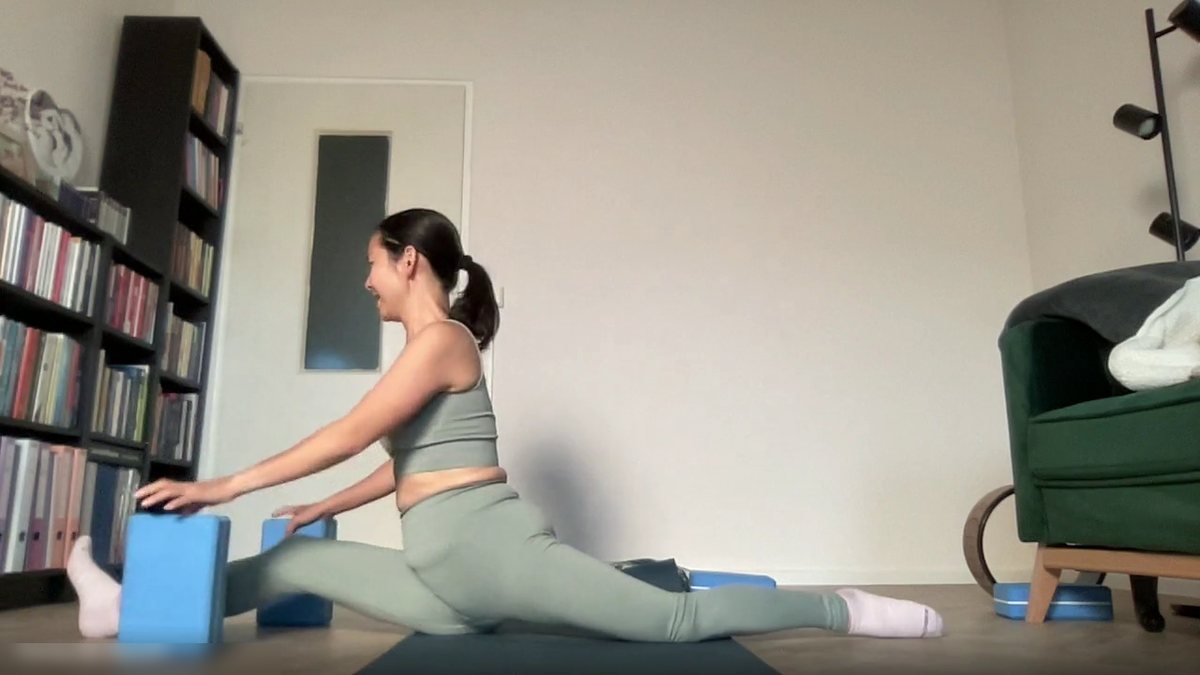
Keep the blocks until you can take them away and the hips stay level. If the hips tilt, the body tips forward, or the shoulders have to brace to hold you, put them back.
Using blocks doesn’t mean you are bad at it. A block raises the floor under your hands, so you don’t have to tip forward to reach it.
Want to know if you’re ready? Take them away for one round, watch the hips, then decide.
22’Turn the mat first, adjust later
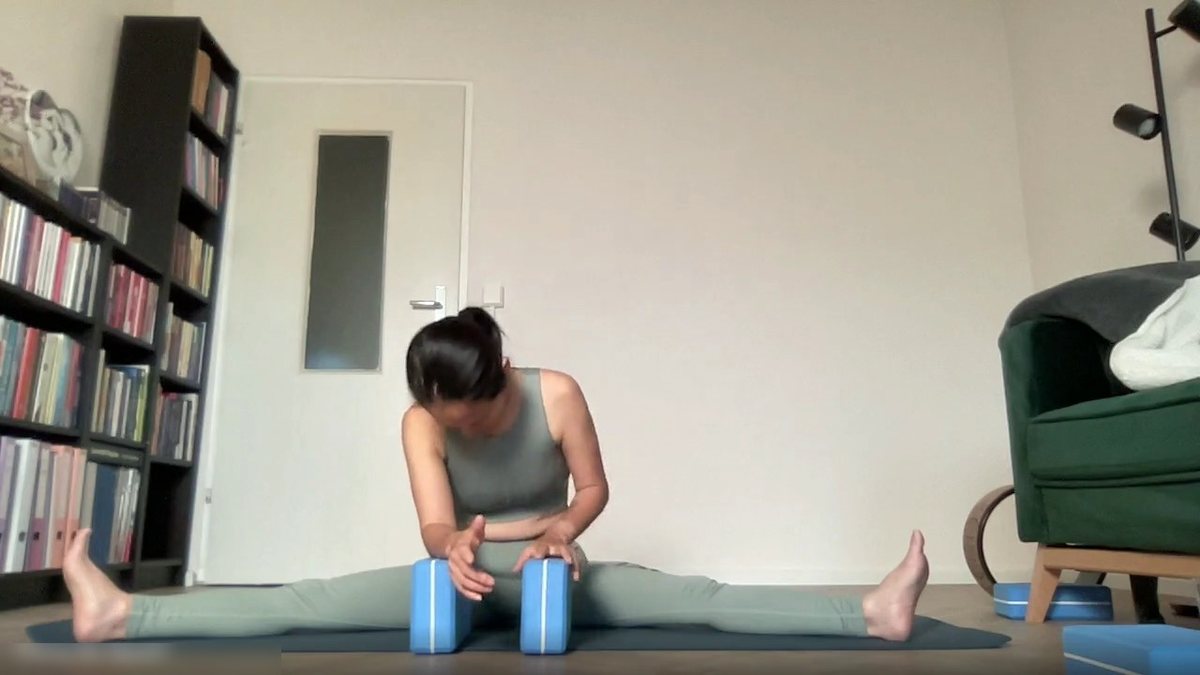
“Do the front splits, but turn the mat sideways too, so I can see the line.”
“Pull the mat back toward the sofa, then point your foot in the sock toward the bookshelf.”
If I can’t see the hips, I can’t adjust them.
Online, I only see what the camera sees. So no splits yet. Turn the mat first.
Sofa, bookshelf, a foot in a sock: I gave directions with things in her room. Say “turn left” and we would argue about whose left.
The side view shows whether the body tips or stays upright, and where the blocks are. It shows less of which way the hips lean, so I still have to ask.
24’“Do I need the blocks?”
“Do I need the blocks too?”
“Just slide down, keep the blocks for now. We can take them away later.”
“Level the hips, level the hips. It’s tilting a bit. Come right a little.”
Blocks first. Off later.
She asked if she needed the blocks. I didn’t say yes or no.
I told her to slide down and see. Depth wasn’t what worried me. The hips were.
A little way down, the hips already tilted. I didn’t say go lower. I said come right a little.
25’“Scared of tearing my groin”
She said “scared.” That word deserved more attention than my joke.
On a tightrope, fear makes sense. On a flat floor, what is there to fear? That was my joke.
She still told the truth.
In the moment, I brushed it off to calm her. Writing this now, I wouldn’t be so sure. What I can say: stop where you can still breathe evenly, hands still on the blocks. Sharp pain? Come out right away.
Scared people rarely go deeper. Push them, and they only brace more.
Read what is said in the clip
- Giang: Tight? Is it tight?
- (a few seconds cut: the student says she is scared, and we both laugh)
- Giang: I’d get it if you were on a tightrope, but on flat ground, what are you scared of? Tearing?
- Student: Scared of tearing my groin.
Guess before minute 27
A few rounds later, one side looked more level. I told her to take both blocks away and put her hands on the floor.
27’Blocks off: hips tilt, blocks back
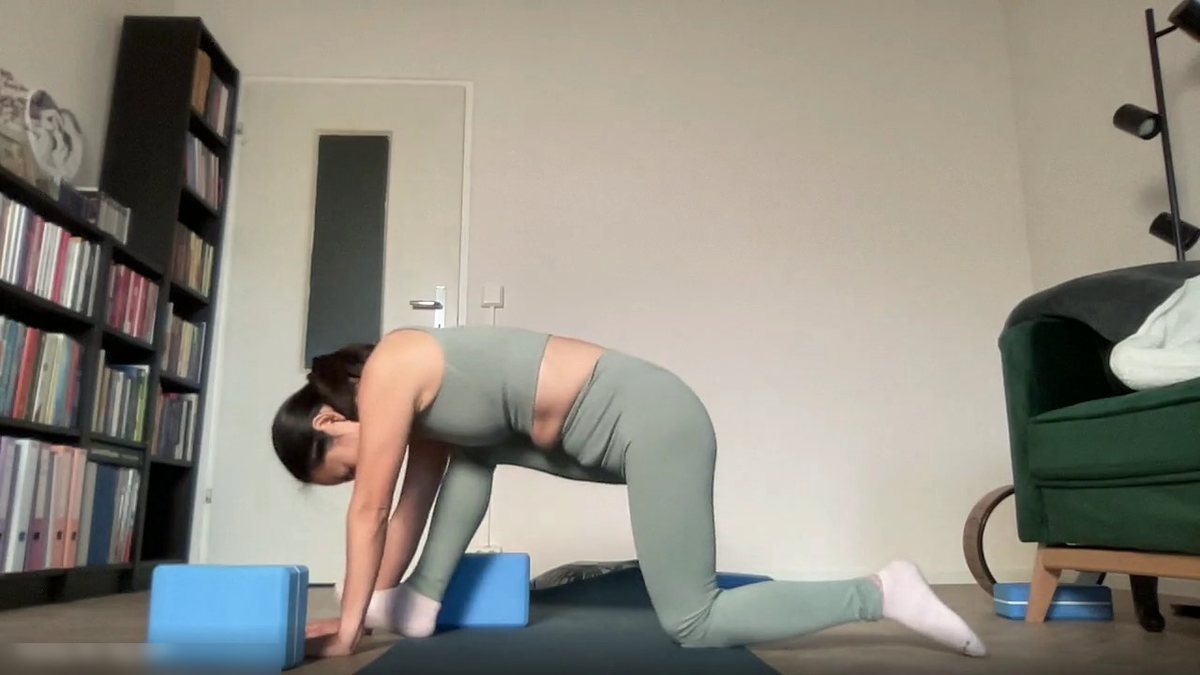
“Hard, right? It’s easier with the blocks.”
“Hard.”
“Take the blocks away and your hips go crooked.”
Taking the blocks away is only a test. Not yet? Put them back.
One word told me enough.
Without blocks, the hands reach lower. The body tips with them. The hips pull to one side.
I don’t call that failing. One try told us both: not today. That’s enough.
30’What I want is level
“And your face, your head, your arms, your shoulders… do they feel light yet?”
“A bit lighter.”
“What I want is level. You don’t need to go deep and crooked. If you need the blocks, use them.”
Level first. Depth later.
A bit lighter means not yet.
If the shoulders still brace, the arms are still holding her up. Take the blocks away now and she would only brace more.
So I said it straight. Not depth. Level.
32’“Giang!” And my good side
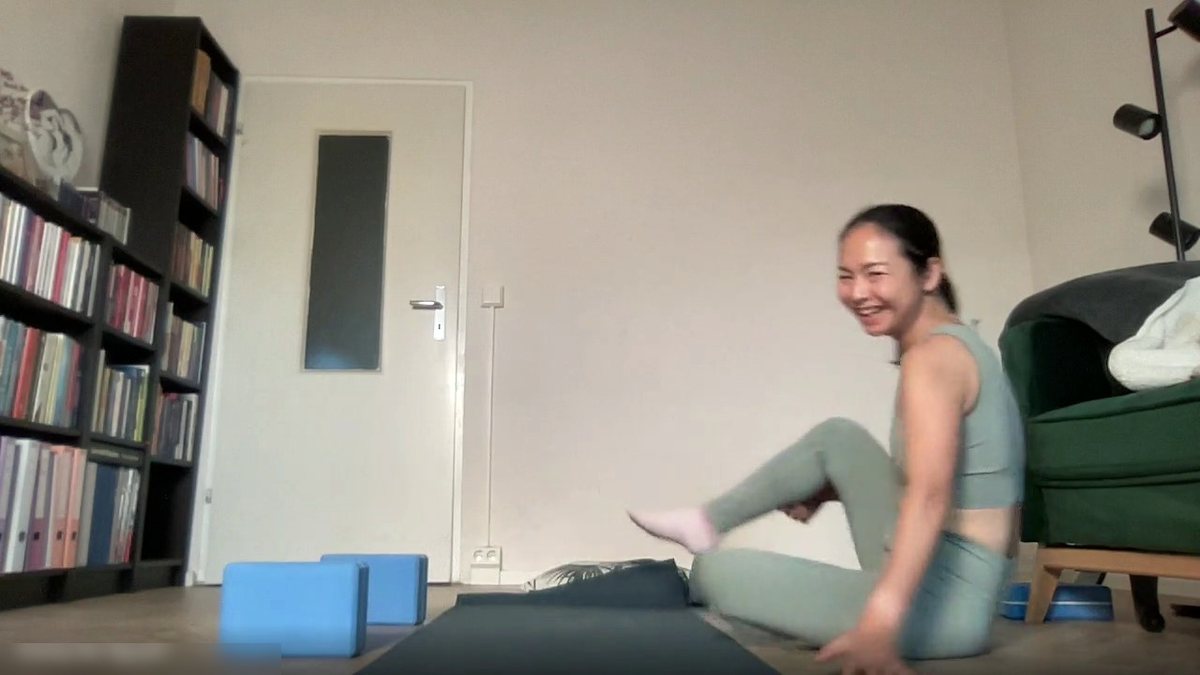
“Giang! I’m down!”
“There’s always one side that’s stiffer. We’ve used one side more for so long. That’s very normal.”
“When I have to show you guys the splits, I always do my good side.”
Everyone has a stiffer side. Me too.
I was really happy for her. But it was one side. The other side still leaned.
So when I demo the splits, you are watching my easy side. My other side takes time too.
When you teach, note each side on its own. Don’t say “she has the splits” when it’s one side. The harder side can keep the blocks longer.
Before the blocks go, check 3 things
- Hips: do they tilt when the blocks go?
- Shoulders: do the arms and shoulders brace to hold you up?
- Body: does it tip forward to ease the stretch?
One “yes” and the blocks go back. That’s fine.
Sharp pain or numbness that spreads: stop completely. If you have a groin, hamstring or knee injury, are pregnant, or had surgery recently, ask a health professional first.
Quick questions about front splits
How long does it take to get the front splits?
I won’t promise a date. Every body is different, and so is every side. I only ask: are the hips more level today, are the shoulders lighter?
Do you need blocks for front splits?
Yes, while your hands can’t reach the floor without tipping forward. A block raises the floor under your hands. Once you can reach without tipping, let them go.
What if my hips tilt in front splits?
Come up a little. Bring the hips back to level, then lower again. Less deep, but level.
What if I’m scared of tearing my groin in the splits?
Say it out loud. Stop where you can still breathe evenly, hands on the blocks. Sharp pain, come out right away. Old injury? Ask a health professional first.
Why is one side of the splits easier than the other?
Most of us use one side more, for years. One stiffer side is normal. Practise both; the harder side keeps the blocks longer.
Learning to teach, one try at a time
This was ten minutes of one online 1:1 class. The whole class is try, watch, change, then ask again.
In the 200-hour online yoga teacher training, you practise, and you also learn to watch other people practise: the camera angle, where to support, when to let them try without. Reading tells you what. Teaching is how you get used to it.
Blocks back. That’s fine.
Sources and limits
The photos, clip and quotes come from one of Giang’s online 1:1 yoga classes on 15 October 2026, minutes 22–33. The class was in Vietnamese. Words were machine-transcribed, checked several times and translated into English; unclear lines were cut, and quotes are shortened. The display name in Meet is blurred. This is not a home plan for learning the splits and not medical advice.

Giang Hoang
Yoga teacher, E-RYT 500 & YACEP (Yoga Alliance)
Giang Metta Academy: RYS 200 & RYS 500 (YA ID 442630)
Based in Da Lat, Vietnam. Teaching online worldwide.