Locust vs Bow Pose: What's the Difference?
My student had just lifted her legs, and her hands were already reaching for her feet.
I said “don't grab” several times in a row. The pose we were practising was locust. Grab your feet and it turns into bow.
Both on your belly. Both lift the chest. Both lift the legs. The only difference is one grip.
Sounds easy. Yet a moment later I got it wrong myself: I called “bend both knees towards your bottom”, then had to correct it to the heels.
The student mixed them up. The teacher did too. Let's see if you do.
Guess before you read on
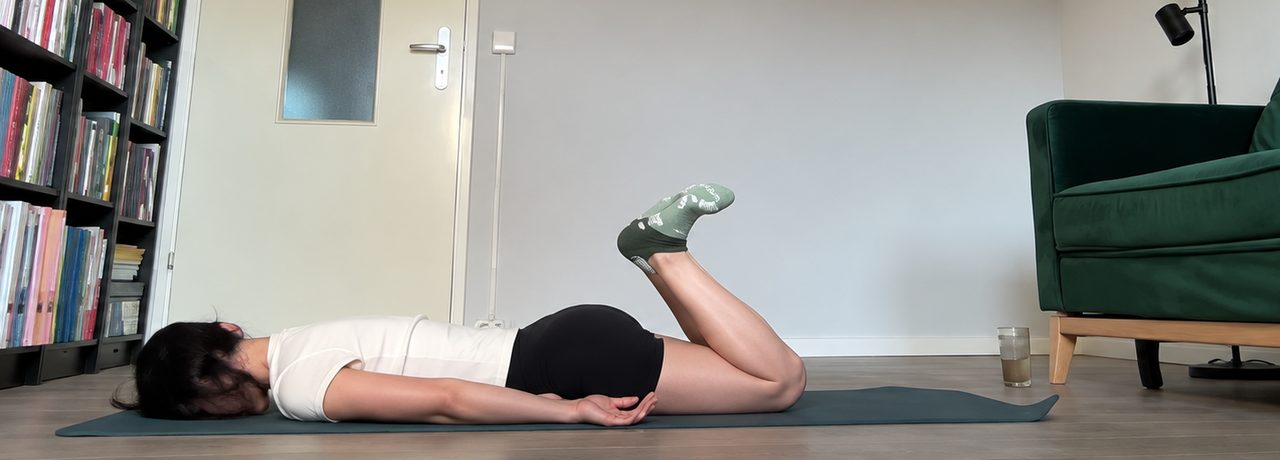
Which pose is she going into?
Not quite. Her hands are resting, yes, but look down at the legs: the knees are already bent. In locust, the legs stay straight. This is the first step of bow. Next, the hands reach back to hold the ankles.
Right. The hands aren't holding yet, so look further down at the legs: knees bent, heels towards the bottom. That is the first step of bow. Next, the hands reach back to hold the ankles.
That is the whole trick: look at the hands first, then the legs.
Locust · Shalabhasana
Hands free. Not holding anything.
Legs straight. Stretch them, then lift.
Bow · Dhanurasana
Hands hold. Grip the ankles, on the outside.
Knees bent. Heels towards the bottom.
The yellow dot is the hand. Look at it first, then at the legs.
Reading this to practise? Go straight to how to do locust. Training to teach? There is a 30-second cue card at the end.
In short
- The difference is in the hands. Locust: hands free, legs straight. Bow: knees bent, hands holding the outside of the ankles.
- The strength comes from the back in both. In bow, your legs lift because of your back, not because your hands pull.
- Flexibility isn't enough. Many very flexible people still can't lift into bow. And stiff muscles don't mean strong muscles.
- Tired is normal. Pain means stop. If you are pregnant, don't lie on your belly. If you have a spine condition, ask your doctor first.
In this article
- Why does one grip change the whole pose?
- Locust pose: how many cues does a beginner need?
- Bow pose: do the hands hold or pull?
- Three misunderstandings about these two poses
- “This is tiring!” Doing it wrong or doing it right?
- Try it now: which pose are you doing?
- When should you ease off or stop?
- A 30-second cue card for trainee teachers
- Questions people often ask
Why does one grip change the whole pose?
Because the hands decide where the legs go.
With the hands free, the legs have to stretch and lift on their own. With the hands holding the ankles, the knees have to bend, and the body curves like a bow with its string pulled tight.
And when a beginner hears “lift your legs”, the hands very naturally go looking for the feet. If they can reach, they grab. The pose changes without anyone noticing.
Where both poses start
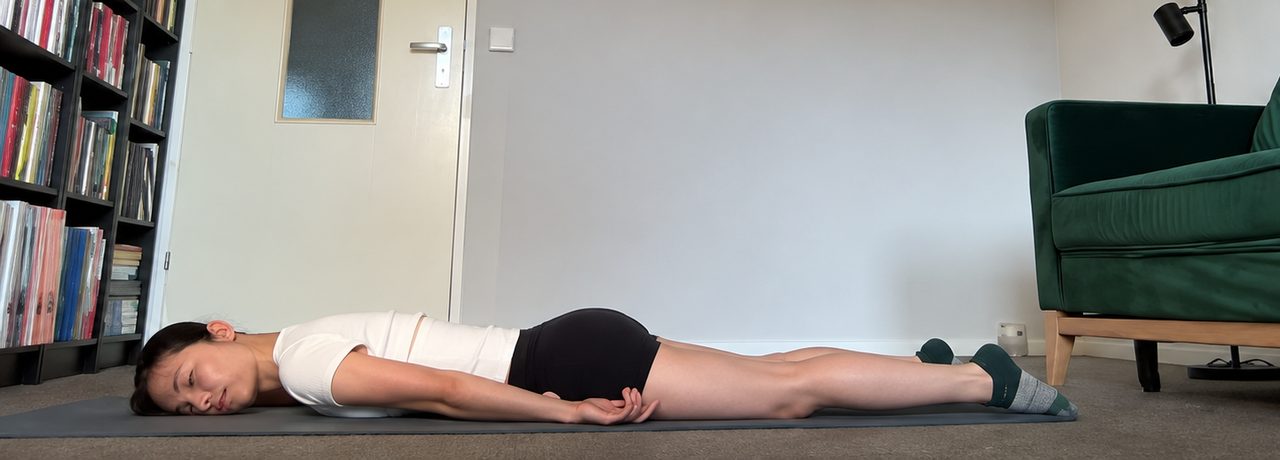
- HandsLocust: keep them here, then lift them with the body. Bow: reach back and hold the ankles.
- LegsLocust: stretch them, then lift. Bow: bend the knees, heels towards the bottom.
It is the same way I tell cobra from upward-facing dog: look at the part that decides the pose, not at how high it goes.
Locust pose: how many cues does a beginner need?
Five. No more.
- Lie on your belly. Arms along your hips, legs stretched out normally.
- Breathe in, lift your head and chest first.
- Lift your arms.
- Lift your legs, stretching them long.
- Breathe out, come down.
As you hold, only your hip bones and belly stay on the floor. Your chest and thighs come off it.
A cue that sends the hands to the feet“Lift your legs.”
A clearer cue“Lift your legs and stretch them long. Your hands hold nothing.”
I said this to her several times. It means the back muscles engage to hold the arms, legs and chest up. The glutes and the backs of the thighs help lift the legs. With a strong enough back, you can hold the pose.
Don't strain your face
Beginners often push the effort into the neck and face. The neck stiffens and the tendons stand out.
I told her: breathe in and let your body feel light, like a balloon filling with air.
Honestly, that lightness doesn't come in one lesson. Practise a lot, practise slowly, get stronger, and then you can lift without straining.
In that lesson, I had her repeat it about five times. Breathe in, lift. Breathe out, come down. Each time, notice what feels different from the last one.
- ArmsStretched back, lifting with the body. Holding nothing.
- LegsStretched long, then lifted off the floor.
- Belly and hip bonesOn the floor.
- Neck and faceThe neck follows the back. Face relaxed, not straining.
Bow pose: do the hands hold or pull?
Short answer: the hands hold, the back lifts. For why, see the three misunderstandings below.
Go back to the photo you just guessed. This time it is numbered.
The first step of bow pose
- Knees bentBoth knees bend first.
- Heels towards the bottomThe heels point towards your bottom. While leading this, I said “knees” by mistake.
- Hands reach backNext step: hold the ankles, on the outside.
Then comes the lift:
- Breathe in, lift your chest and head first.
- Then lift your thighs.
- Breathe out, lower your chest and thighs to the mat first, then let go with your hands.
For the first round, two cues are enough: “chest first, thighs after” and “use your back, don't pull with your hands”.
Three misunderstandings about these two poses
All three came up in a single lesson.
Sounds right, but it isn't
1. “In bow, your hands pull your legs up.”Misunderstanding
Your hands only hold. To get your arms and legs high, you need strong back muscles. It isn't strong hands pulling the legs up. The back muscles still do the main work, just like in locust.
2. “If you are flexible, you can do it.”Misunderstanding
Some people are very flexible, really bendy, and still can't lift into bow. Their muscles aren't strong enough to lift them.
My student asked: so working on strength is easier than making the muscles softer, right? Right. When your back is strong enough, the rest of your body follows as far as your back lifts. Much better than the other way round.
3. “My muscles are stiff, so they must be strong.”Misunderstanding
She said: my muscles are stiff. I told her: stiff doesn't mean strong. Stiff is often just tight. Strong also includes flexibility.
And if you feel stiff, don't decide you can't do yoga. I wrote about this in not flexible enough for yoga?
With these two poses, I talk more about back strength than about flexibility.
“This is tiring!” Doing it wrong or doing it right?
In the middle of bow, she blurted out: I didn't think one yoga pose could be this tiring.
Yes. Done properly, a strong pose is tiring. A restful, relaxing practice is lighter. That is fine too.
That day she was even more tired than usual.
Tired: rest, then carry on. Pain: stop. Those are two different things.
Try it now: which pose are you doing?
You have guessed someone else's photo. Now it is your turn. Used to lying on your belly, and no back pain? Try one round of low locust. Lift as far as is comfortable, then ask yourself:
- Are my hands holding anything?
- Are my legs straight or bent?
- Are my neck and face straining?
Try it, then choose what you notice
How did you answer those three questions?
Hands free, legs straight: you are in locust. Lift your chest and legs as far as is comfortable. No need to go high.
Hands holding the feet, knees bent: you are getting into bow, or are already in it, not locust. If you are lifted, slowly lower your chest and thighs to the mat first, then let go of your ankles. Rest a moment, then try locust again: arms by your sides, legs straight.
Neck stiff, face straining: come down a little. A small lift with easy breathing is better than a high lift with strain.
Pain, numbness or dizziness: come down and stop this round. See when to ease off or stop.
This is self-observation, not a diagnosis.
When should you ease off or stop?
Ease off
You are breathing fast, straining your neck and face, or you can't reach your ankles. Lift lower, do locust instead of bow, or lie down and rest.
Stop
Pain in your back, neck, shoulders or knees; numbness or pain that spreads; dizziness. Don't wait for sharp pain. If the pain doesn't go away or keeps coming back, see a doctor.
Ask a professional first
Pregnancy (both poses press on the belly), long-term back pain, a spine condition, or recent surgery. I can't diagnose anything through an article.
A 30-second cue card for trainee teachers
Your students will never say: “I'm doing bow, not locust.”
They just do what they hear. If your cue doesn't say where the hands go, and whether the legs are straight or bent, don't blame them for grabbing their feet.
Screenshot this card if it helps:
Locust
1. On your belly, arms by your hips, legs straight.
2. Breathe in: head and chest lift first.
3. Then the arms. Then the legs, stretched long.
4. The hands hold nothing. The back does the work.
5. Breathe out, come down.
Bow
1. On your belly, knees bent, heels towards the bottom.
2. Hands hold the ankles, on the outside.
3. Breathe in: chest and head lift first.
4. Then the thighs. Use your back, don't pull with your hands.
5. Breathe out, lower chest and thighs first, then let go.
My student that day was training to teach, so I told her: do each pose five to seven times, slowly, feeling it carefully. Feel it in your own body first. That is how you will later be able to guide it, and understand your students' bodies.
In my 200-hour online yoga teacher training, I teach each pose like this: practise it in your own body, tell it apart, then practise leading it for someone else. After you graduate, you still have to stand in front of a class and build experience yourself. Other people's bodies are not like yours.
Questions people often ask
Can you hold your feet in locust pose?
In the locust I teach, no. Arms by your sides, then lift them; legs straight. Holding your feet with your knees bent is bow.
Where do you hold in bow pose?
The ankles, on the outside. Bend both knees and bring your heels towards your bottom first, then reach back with both hands to hold.
What if I can't reach my ankles?
Don't jerk your body to reach them. Ask a teacher to watch how you come in and choose a way to practise that suits you. There is no need to force bow yet.
Do you breathe in or out as you lift?
In my class, breathe in as you lift and breathe out as you come down. If you are new and can't match it yet, breathe normally. Don't hold your breath. I write more about this in how to breathe in yoga.
How many times should you do each pose?
In that lesson, I had her do locust about five times. When you are training to teach, do each pose five to seven times, slowly, to feel it. If you are tired, do fewer.
Last words
The two poses are almost the same. The difference is in the hands.
And the strength comes from the back, in both.
Look at the hands first.
Read more
- Cobra vs upward-facing dog: how do you tell them apart?
- Can't do wheel pose yet? What to practise first
- Not flexible enough for yoga?
- How to cue yoga poses so beginners can follow
- How to observe and adjust a student's yoga pose

Giang Hoang
Yoga teacher, E-RYT 500 & YACEP (Yoga Alliance)
Giang Metta Academy: RYS 200 & RYS 500 (YA ID 442630)
Based in Da Lat, Vietnam. Teaching online worldwide.