Online
Live on Zoom
Groups of 3 or more
13 M VND
Early Bird 11.7M VND
Private 1:1
16 M VND
No Early Bird
discount
For beginners · 50H · Online or in person in Da Lat
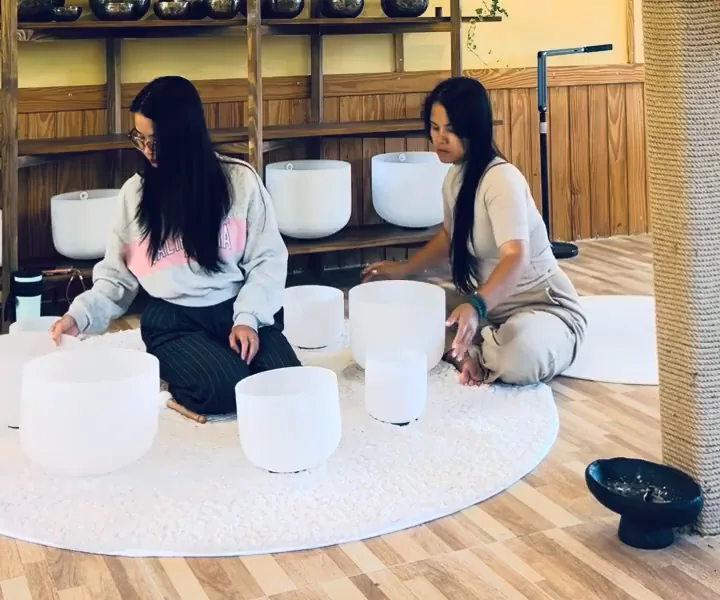
Someone tells you they have felt tired for a long time and cannot relax. What does a sound facilitator need to understand? You can start with the basics, even if you have never played a singing bowl.
Learn to place a bowl, hold the mallet, strike, play around the rim and listen to the sound before combining bowls and guiding a session for rest. The course focuses on exhaustion, “freezing” and feeling drained. Metal bowls are used alongside crystal bowls during practice. You do not need to know how to play them before you start.
Tuition from 13M VND · 11.7M VND for the first registrant in each group class30 hours with Giang + 20 hours of guided independent practice.
Groups of 3 or more, or private 1:1.
Exhaustion, “freezing” and nervous system responses.
Crystal bowls, mallet pressure and lower-pitched sounds.
A session with preparation, listening and a clear ending.
Physical and emotional feedback, and how to respond.
01 · Nervous system foundations
Exhaustion, depression and “freezing” are not treated as one condition. We explain the terms through concrete situations before discussing the sound facilitator’s role.
Prolonged stress and feeling drained
Polyvagal Theory and defensive responses
What do we feel? What does research show?
02 · From the first sound
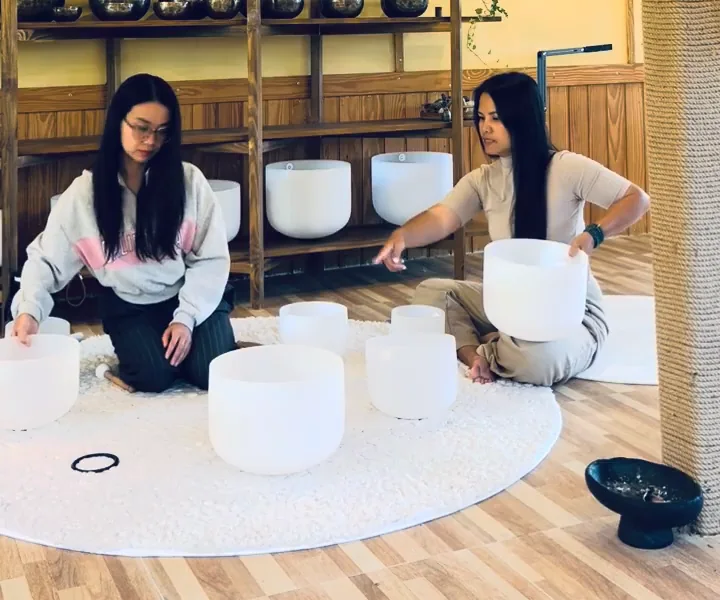
Start with one bowl: placement, holding the mallet, a gentle strike, playing around the rim and listening. Once familiar, practise changing pressure, distance and the combination of bowls.
Explore how to arrange crystal singing bowls by musical intervals →
Never held a mallet? Start here.
Combining low-pitched metal bowls with crystal bowls
Start gently. Control the transition.
Working with listeners who are sensitive to sound
03 · Practise guiding a session
Plan a restful session with crystal bowls, from the opening conversation to the close. These three steps organise a session. They are not a treatment protocol.
Ask what they need and what they want to avoid. Introduce the instruments, try sounds with permission and agree on a stop signal. Prepare a place to rest, a clear path to leave and a choice of positions.
Introduce sounds gradually, add metal bowls when appropriate and leave room for silence. Use feedback to adjust the pace. Tears or shaking are not goals.
Reduce the sound, allow quiet time and invite the listener to notice the room again. Let them choose when to open their eyes, move, sit up or share anything. Ask how they feel before ending.
I cannot promise a space with no risks. What I can prepare is how to ask, listen and stop.
04 · Observe and respond
A practice scenario
You play one crystal bowl, then add a second. The listener says:
“I felt more comfortable when there was just one bowl.”
What would you do next? Why?
Tension, relaxation, shaking or numbness
When someone cries, stays silent or wants to leave
Gently bringing attention to the present
Scope of the course: training for sound practitioners, not training to diagnose or treat depression, trauma or neurological conditions. Bowls do not replace medical or psychological care. When learning about the nervous system, we distinguish what research has established from what remains uncertain.
How you learn · 50 hours
Giang guides you from bowl placement, holding the mallet, striking and playing around the rim to combining sounds and guiding a listener. You practise, receive feedback and try again.
Online: live sessions on Zoom. Da Lat: in-person classes.
Follow the assigned practice, note what you hear and what you cannot yet control. Make recordings as requested, receive feedback and adjust.
The same hour structure applies online and in person, in groups and in private 1:1.
You need a stable connection and a setup that captures sound and shows your hands clearly. Discuss your bowls and recording setup with Giang before class. Zoom audio does not tell us the actual volume in your room.
Agree on dates with Giang before booking travel or accommodation. Guided independent practice is still part of the course.
If you have no bowls yet, talk with Giang about preparation before buying. If you already have a set, send its details so you can discuss how to use it in class.
Tuition · the full 50-hour course
Fees are per person and cover nervous system foundations, crystal bowl technique, session structure and observing feedback.
Live on Zoom
13 M VND
Early Bird 11.7M VND
16 M VND
No Early Bird
discount
In-person classes
16 M VND
Early Bird 14.4M VND
19 M VND
No Early Bird
discount
30 hours with the teacher20 hours of guided independent practice.
10% Early Bird discount for the first registrant in each group class. Groups start from 3 people. No Early Bird discount for private 1:1.
Before you join
Yes. This course is for beginners. You do not need prior bowl skills or another bowl course. Start with placement, holding the mallet, striking, playing around the rim and listening. Then practise combining sounds and guiding sessions. If you have no bowls, talk with Giang before buying.
No. It teaches sound skills and session facilitation, not diagnosis or treatment. Terms such as “freezing” are not used to decide what condition someone has or to promise that bowls will resolve it.
To learn how to read and set limits around an explanation often used in the field. We distinguish the theory’s account from what research has verified. We do not assign a behaviour or a bowl’s note to one branch of the nervous system.
Groups start from 3 people. Private 1:1 means learning individually with Giang. Both include 30 hours with the teacher and 20 hours of guided independent practice. Early Bird applies only to the first registrant in each group class.
Discuss your preferred format and available dates with Giang before confirming a schedule. For Da Lat, agree on dates before booking travel or accommodation.
Start with a conversation
Tell me what you want to learn and the format that suits you: online or in Da Lat, in a group or private 1:1. If you have never played or do not own bowls, say so. We can discuss how to prepare.
Let’s find your starting point.